


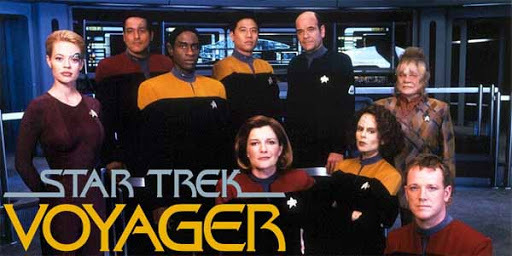
Directed by Rick Berman, Michael Piller, Jeri Taylor
1995 to 2001, Paramount & CBS
172 episodes, 45 minutes
Rating: ★★★★☆
Star Trek: Voyager holds a special place in my heart. I grew up with it, since it aired throughout my childhood on Space—a Canadian science fiction channel, now known as CTV Sci-Fi Channel. I remember watching a few scattered episodes when I was young, but only took it upon myself to watch the series in its entirety in my late adolescence. Soon after, Voyager became one of my favourite series. With its thought-provoking episodes and complex characters, Voyager represents what I consider to be the best of what science fiction has to offer. It’s interesting that recently Voyager has finally been recognized for its brilliance after years of being ostracized by the Star Trek fandom. Strangely enough, I feel as though the reasons for the fandom’s distaste of Voyager are the very same reasons as to why I—and many others—enjoy it so much now. The show’s strengths are in its setting, as well as its characters, which are either strong female characters, or men who are not afraid to be vulnerable. There are certainly characters and elements that can be seen as problematic, but I think on the whole, the show does a good job of being forward-thinking. To best illustrate this, I will be highlighting my favourite characters and then speaking about the impact Voyager has had on me.
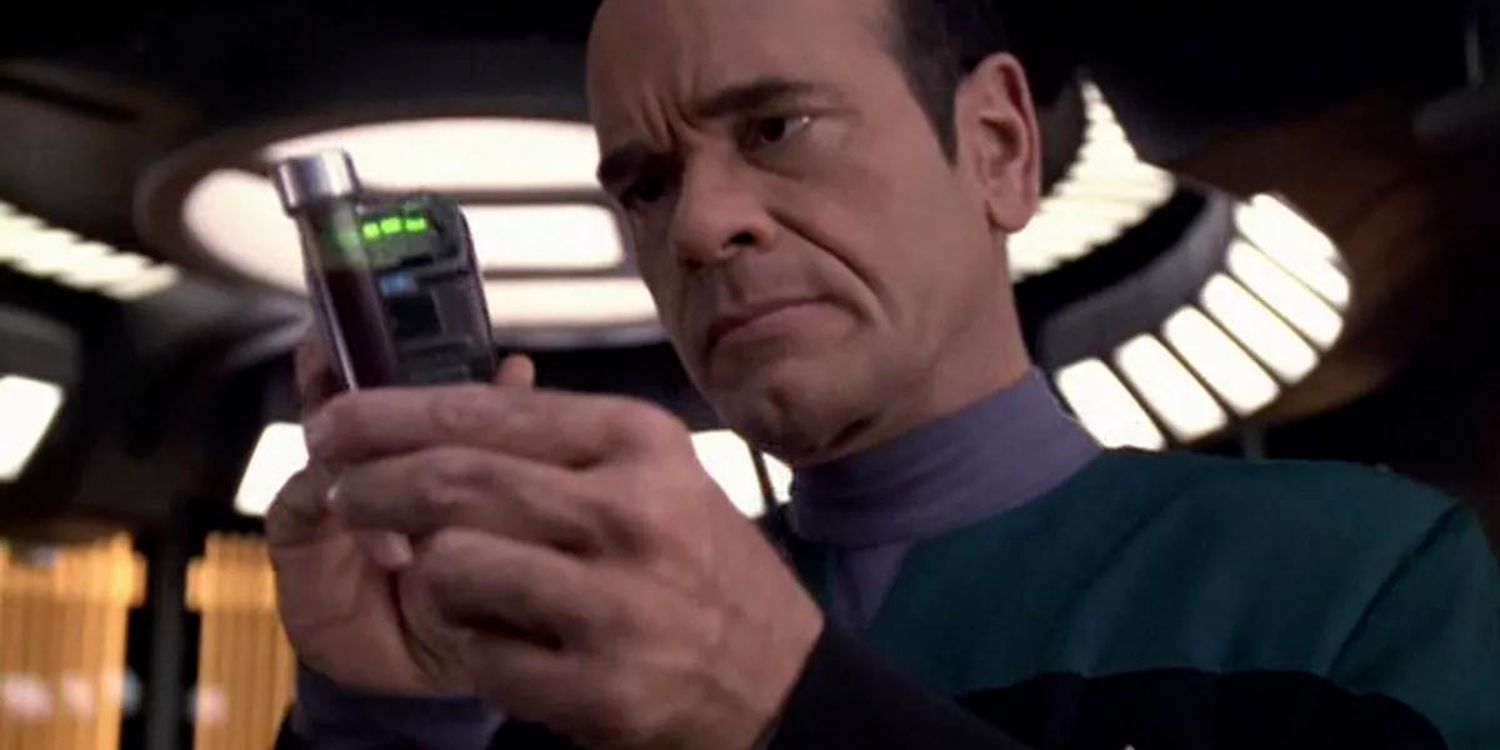
While I still identify the most with The Doctor, I’ve come to realise two things since writing this retrospective. Firstly, I am fairly certain I am not neurodivergent. More likely is that I have trauma which manifests in similar ways to neurodivergence. Secondly, I have come to adopt the position that coding AI or robot characters as neurodivergent is largely problematic, as it dehumanises those who have neurodivergence by association. Many people with neurodivergence still positively identify with these characters—as do I—but I still think the trope is worth examining.
I’m a sucker for good AI characters. There’s this just something about the concept of a lifeform created by humans that then learns to be an emotionally intelligent being. Often, these AI characters have academic intelligence, in that they are very knowledgeable about the world or have access to large databanks of knowledge to pull from. However, they are not developed emotionally, and so can’t navigate social interactions well. Anyone who deals with neurodivergence can relate on some level to this, especially anyone who excels at learning, but has problems with socialization.
The Doctor embodies this role well, right down to the cynicism and hostility that many people internalize if growing up with neurodivergence. He is “born” bitter, confrontational and incredibly sensitive to how he is treated by others. I think Voyager does a good job of portraying how the Doctor’s environment more than his nature is what makes him what he is. Voyager’s crew treat the Doctor as a piece of technology, and so he responds the only way he knows how: with sarcasm, every word dripping with vitriol. It’s not until Kes speaks to him as a person and allows him to be emotionally vulnerable that he begins to question whether he deserves to be treated differently from the rest of the crew because of what he is.
I’ll be honest that I never really understood why the crew can look at the Doctor and not see a person. I feel there’s too much of a suspension of disbelief on the audience’s part, as I believe almost everyone who watches the show would immediately recognize the Doctor as a person. It’s hard to believe that we, who treat roombas and video game characters as we would real people, wouldn’t be able to extend the same empathy to an entity nearly identical in every way to us except for its construction.
That being said, the Doctor’s character development is my favourite from the series, as he goes from being cynical and bitter to being genuinely compassionate, creative, and optimistic. He even goes so far as to become Seven of Nine’s mentor, using what he’s learned to help her “regain her humanity”, or so Janeway says.
I can’t help but identify with the Doctor. I grew up isolated from others, due in part to my excellence at school, similar to how the Doctor is isolated from the crew, despite how essential he is to them. Looking back and knowing what I do today, I mostly likely suffered—and likely still suffer—from some kind of neurodivergence. In that way, the Doctor’s journey through life is something I was able to look up to. I saw how he examined himself and focused on the things he could change, such as his personality and his independence. Once he made these changes, he was able to demand more respect from the people around him, and even make friends with the people around him. Instead of cursing the world for being unfair and unwelcoming, he changed his outlook on life, leading him to being happier and more fulfilled.
There are some issues with the Doctor though, and I’d be remiss if I didn’t bring them up. The first is that his affection for Seven of Nine is inherently problematic. It relies somewhat on the Born Sexy Yesterday trope—something that comes up time and again with Kes and Seven of Nine, though it’s most evident between the Doctor and Seven of Nine. His affection for Kes is also strange—it’s as if the writers for these relationships couldn’t see him develop a romantic relationship with anyone other than the women closest to him. In itself, this isn’t really a problem. Men today often mistake platonic relationships with women as having romantic implications. The problem is that this behaviour is never addressed as negative, and is instead forgotten once no longer required for dramatic effect. I can’t tell whether this arises from the episodic nature of the show or not. I’m just disappointed the show lets the Doctor get away with it.
My second issue is how the Doctor’s personality seems to downgrade when he is not the focus of an episode, as does the way characters interact with him—Janeway in particular. This actually happens with most characters whenever writers for individual episodes need someone to fill a specific role, usually for the character development of that episode’s protagonist. I think it’s just more obvious with the Doctor since his character development is so drastic. It can be jarring whenever Janeway compares him to a toaster 5 seasons in, or when he acts self-absorbed a few episodes after being heralded as a hero. Or perhaps I’m more sensitive to him being misused like this since he’s my favourite character. I can’t say for certain.
The third and last issue with the Doctor lies within his nature as an AI. This problem extends broadly to all AI characters in fiction, and has to do with gender and sexuality. I think it would be difficult to argue against the following statement: AI and robots are artificial constructs, and so do not have genders or sexualities inherent to their construction. By the most literal definitions of the words, all AI and robots are “assigned” genders and sexualities by their creators. What this means is that the Doctor is, essentially, a non-binary, asexual being. In fact, the Doctor doesn’t even have genitalia when he is first activated. He is male-presenting of course, and identifies as male, as we learn he was modelled after a cishet male. But arguably, this was not a decision he made for himself, and instead is inherited from his design.
How is this any different from a cishet person identifying as such? Well—for one—the Doctor does actually experience body dysphoria on multiple occasions, mainly in the form of comparing his holographic body to organics. But beyond that, his assigned gender and sexuality represent a troubling trend in science fiction, wherein all AI characters have to fit the gender binary, when it makes no sense for them to be so. This usually comes in the form of the actor or voice actor bringing the character to life, but more often than not the issue arises from how the character is handled in the writing and how the fans react to the character. This means that male-coded characters have deep, masculine voices with large, square and angular bodies, while female-coded ones have high-pitched, feminine voices, with soft, curved bodies, complete with breasts and a woman’s face.
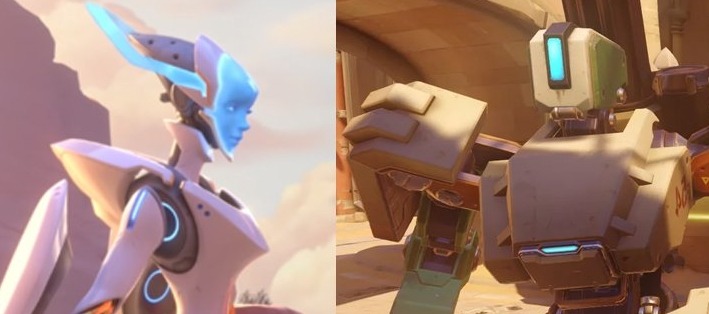
Echo and Bastion from Overwatch are quite possibly the best examples I could find of this problem in action. Echo, pictured left, is a female-coded robot. Pictured left is Bastion, is a male-coded robot.
This last issue with the Doctor is the most frustrating to me, but I can understand why non-binarism wasn’t something the writers of Star Trek: Voyager were able to explore, given the time period when the series was produced. It would have made for an interesting topic for an episode though. It’s not as if the Doctor never changes his appearance, and he even inhabits the consciousness of someone of the opposite gender in episode 7x07 Body and Soul. Nonetheless, I found the Doctor compelling despite these issues, which I think speaks to how compelling and complex the character is, flaws and all.
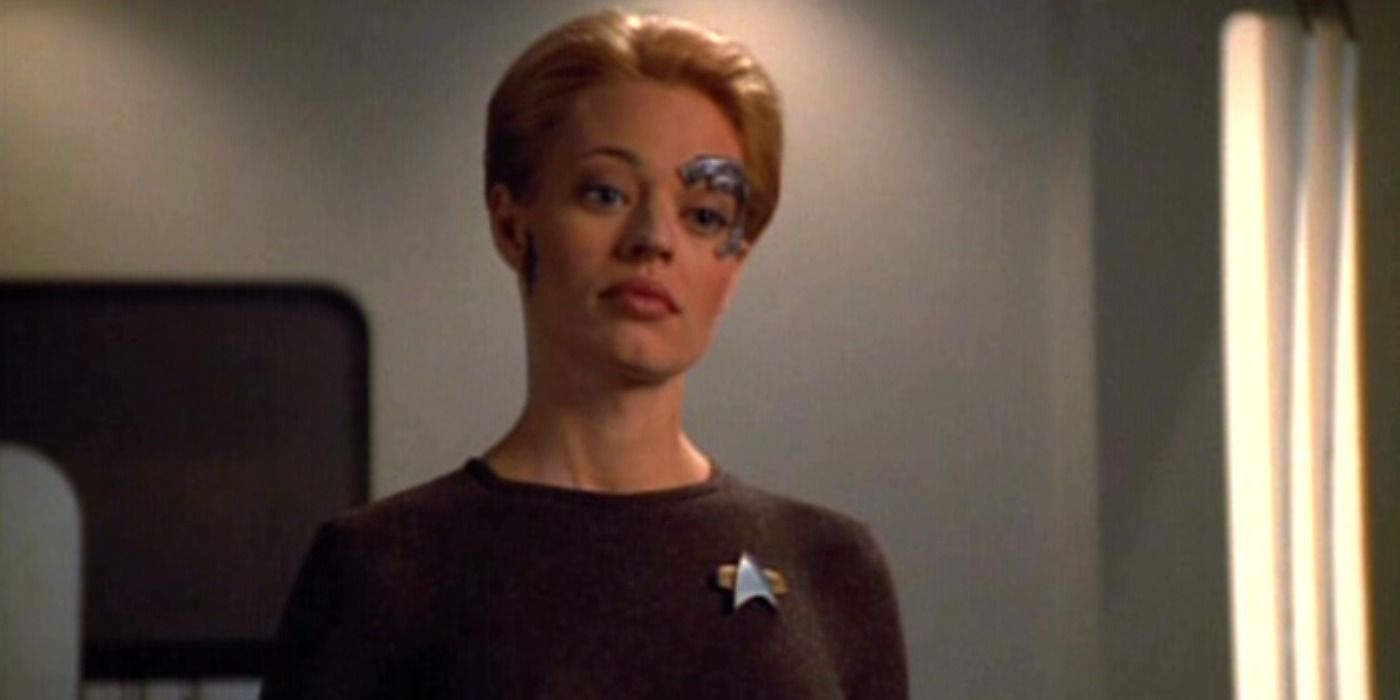
Perhaps the most difficult thing for me to come terms with was that I shouldn’t shy away from seeing Seven of Nine as a compelling character simply because she is oversexualized. While the producers deny this was the intent in her design, I doubt anyone believes it’s an accident that she was introduced at the same time that Kes was written out of the show. Both characters fill a similar role of being the resident naïve young woman desired by multiple men, often in a problematic manner. Combine this with Jeri Ryan’s undeniable beauty and acting ability, and you have the perfect storm for attracting young men to the show that may have previously been put off by Voyager’s feminist themes.
As a cishet man, I was afraid that I was falling into the trap set by Voyager’s producers. However, on repeat viewings and through discussions with my fiancée, I’ve come to realize that her sex appeal does not have an impact on my fondness for her. Seven of Nine is an incredibly compelling character, and it’s easy to see why she is beloved by so many Star Trek fans, even to this day. Much like the Doctor, her character development is centred around gaining emotional intelligence to supplement her academic intelligence inherited from her time with the Borg. This in itself is appealing, but the way characters act toward Seven of Nine is completely different from the Doctor.
Seven of Nine carries a lot of baggage from her time with the Borg, both in terms of her mental state and her social standing. Much of her journey is focused around accepting her past and learning from it, while also gaining the trust of a crew who have learned to despise her. Seven of Nine character development serves as a good metaphor for the rehabilitation of people who were once a part of extremist groups or cults—something that is more relevant today with the increased visibility of white supremacy and other right-wing idealisms. We’re shown that abandoning violent, discriminatory ideals can be difficult, as they represent a safety net to the individual, a way for them to feel powerful and secure in their power. Although, I can’t say I totally agree with the way Janeway facilitates Seven of Nine’s transition. It’s been proven that compassion, understanding and patience convert extremists, more so than authoritative and violent action, as is the case in Voyager.
While this aspect of Seven of Nine is interesting, and allowed her to become a very endearing character, it’s not something I could identify with. What I did identify with, though, was the development of her social skills. When first introduced, Seven of Nine appears to not have a personality, being permanently Borg in her behaviour. However, as more Borg converts are introduced, it’s clear that her robotic, automaton personality is a choice. She feels secure, perhaps even invulnerable when wearing her cold, impassive, logical mask. I think that this is what attracted me the most to Seven of Nine as a character, as I spent most of my adolescence doing the same. I feel this is best represented in episode 7x18 Human Error, wherein it is revealed that Seven of Nine is literally, physically unable to express intense emotions. Seeing her growth and transformation into an emotionally secure individual was a real inspiration to me.
Apart from her oversexualization, Seven of Nine’s only other issue is something I mentioned previously, namely that she fills the Born Sexy Yesterday trope, in relation to her relationship with the Doctor.
Fortunately, her other romantic relationships aren’t problematic, as there isn’t a disproportionate power dynamic between herself an Axom or Chakotay, though the latter is questionable from a story perspective.
Overall, Seven of Nine is a very solid character, and I’m glad I was able to look past the intent of the producers to fully appreciate the character. It’s still not something I think we should forgive. Seven of Nine would have been just as good a character if she wasn’t constantly in a skin-tight suit. Hell, she might have been a better character for it. But I don’t think I should write a character off as simply fan service when this kind of thing happens, as it is a disservice to the character and the writers, simply because of a decision on the part of the producers.
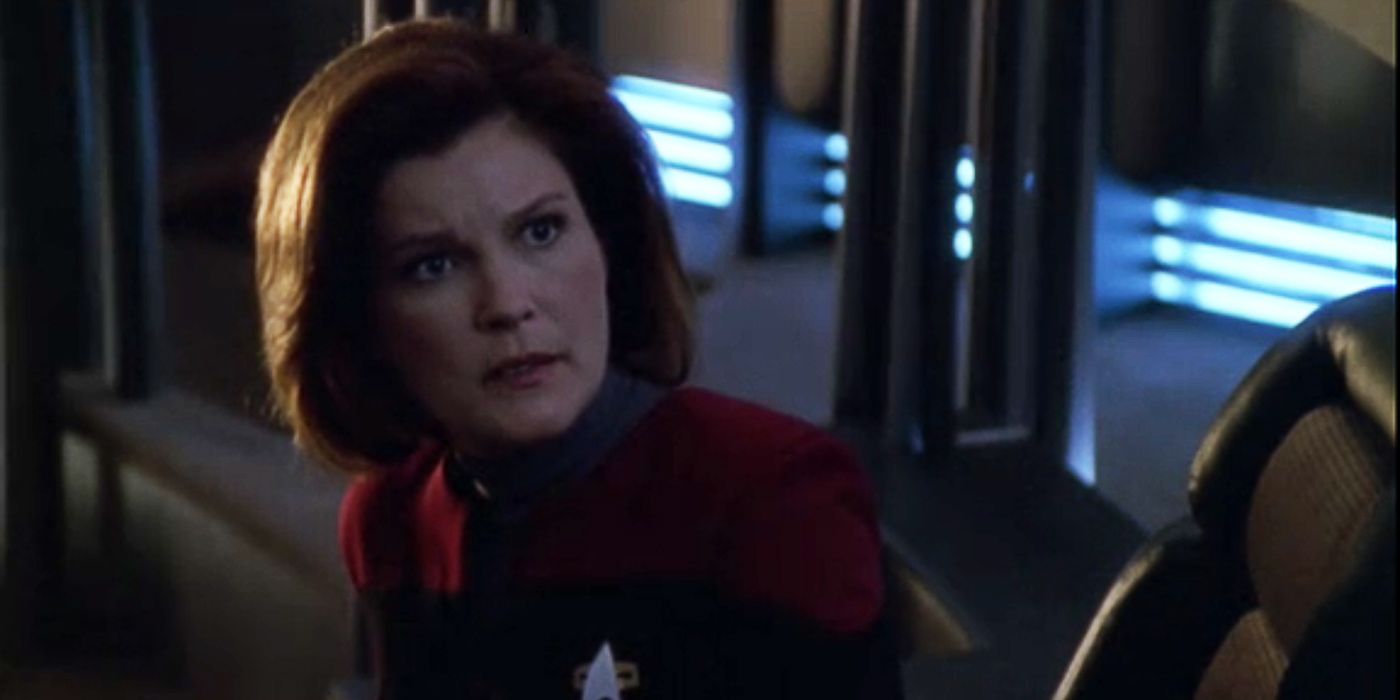
If I had to describe what makes Voyager what it is, I would have to say it’s Janeway. She is at the core of the show’s driving principles. She is a strong female character, able to go toe-to-toe with the Borg, but keeps her feminine side despite being as capable—if not more—than her male counterparts. It’s honestly difficult for me to describe what Janeway does for Voyager, the Star Trek canon and science fiction as a whole. And I’m not the only one who thinks so, if the statue of Janeway made to honour her role in inspiring women to get into STEM is any evidence.[1]
While I can’t claim to have been inspired in quite the same way, Janeway has ingrained herself into my psyche on a permanent basis, acting as a measuring stick to whom I compare all my female characters to. She is not only a great female character. She is a great character, period. As proof, all you have to do is read some of her best quotes, including:
You can use logic to justify almost anything. That’s its power. And its flaw.
You know as well as I do that fear exists for one purpose, to be conquered.
You know, I’m really easy to get along with—most of the time—but I don’t like bullies, and I don’t like threats—and I don’t like YOU, Culluh. You can try and stop us from getting to the truth, but I promise you, if you do, I will respond with all the “unique technologies” at my command.
It often feels like Janeway can do no wrong, and yet she still makes mistakes. And when she does mess up, she owns up to it. For example, in 2x14 Alliances, Janeway decides to trust the Trabe and some of the Kazon tribes, looking to form a new Starfleet within the Delta Quadrant, at the behest of Chakotay and other former Maquis crew members. On a surface level, this appears to be a sensible decision, as Janeway and the entire Voyager crew would definitely benefit from having allies. After all, the Voyager starship was never meant for deep space assignments like this. However, Janeway doubts this decision from the very beginning—doubts that end up coming to fruition when the Trabe attacks the Kazon at a diplomatic conference. Once the aftermath has been resolved, she takes responsibility for the decision, but also re-affirms her principles, as shown in the following quote:
I hope there’s a lesson for all of us in this. Although some of the species we’ve encountered here have been peaceful, others seem governed only by their own self-interests. This appears to be a region of space that doesn’t have many rules. But I believe we can learn something from the events that have unfolded. In a part of space where there are few rules, it’s more important than ever that we hold fast to our own. In a region where shifting allegiances are commonplace, we have to have something stable to rely on; and we do: the principles and ideals of the Federation. As far as I’m concerned, those are the best allies we could have.
So, I think it’s easy to see why Janeway ranks so high in my list of favourite characters. The only reasons she’s not number one are that I identify much more with Doctor and Seven of Nine, and I find Janeway to be too greater-than-thou at times. Her best moments are when she’s a badass, or she supports her crew. But these moments are limited, interspersed between long moments in the frankly strange everydayness of being a starship captain. Of course, there are some other issues with Janeway, but I feel like these are inherent to the writing, and have nothing to do with her as a character.
Similar to the Doctor, it feels like Janeway’s behaviour and role in individual episodes varies wildly depending on whether she is the protagonist or not. This on its own is bad enough. The worst of it though is that she is almost always a foil to the protagonist when this happens, acting as an impassable obstacle for whatever the protagonist is trying to do. This is why Janeway is so often antagonizing the Doctor, or why she needs to discipline Maquis crew members on the regular in the early seasons. It makes sense—she is the captain, after all. But I can’t help but feel like in these moments, she is acting in a way the narrative needs her to act, and not in how she would act normally if she was the focus.
I feel like I have not been clear in why Janeway is a great character. It’s just honestly very difficult describing the impact she has had. She is the best example of why we need more strong female characters in positions of power in fiction, as she made Voyager immensely more interesting and has helped to set the tone of the show throughout its runtime.
I have a lot of feelings when it comes to the main cast of characters on Voyager, but I don’t want to spend a lot of time on each one. With that in mind, the following is a summary of what I like—or don’t like—about the characters. Characters are ordered by most to least favourite.
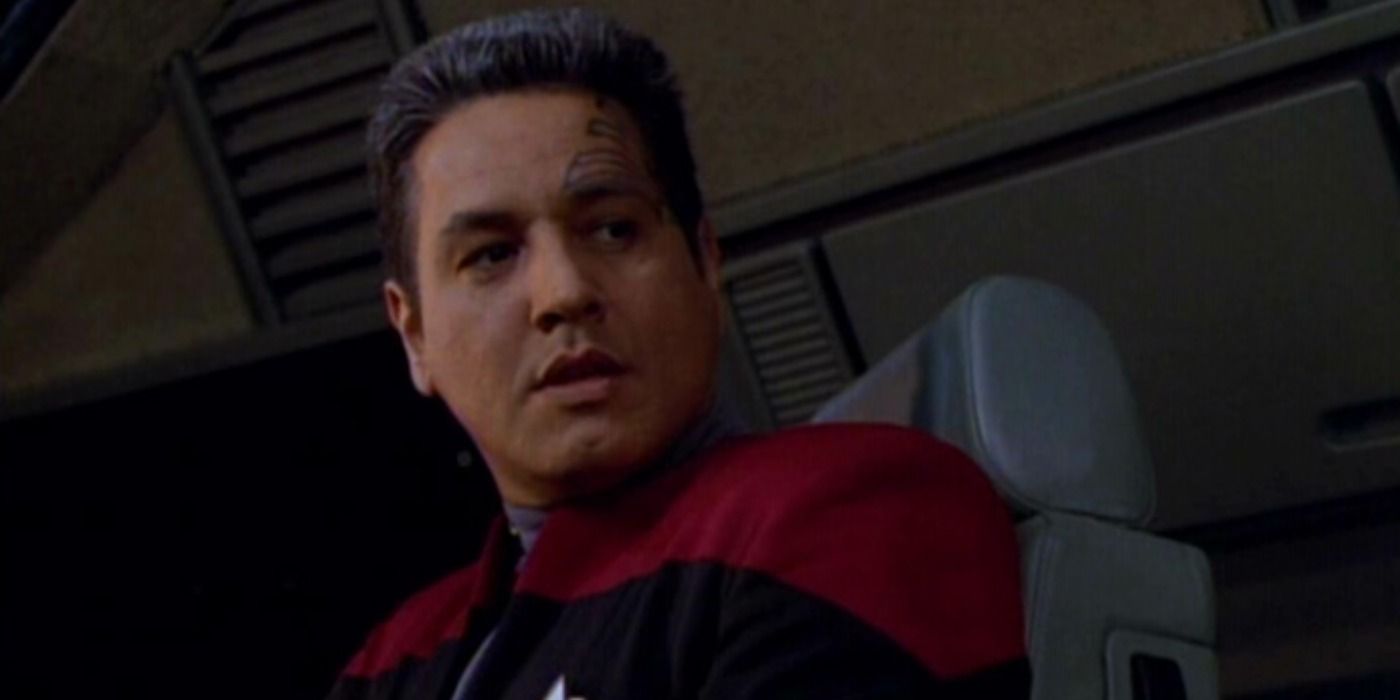
If Janeway is the soul and body of Voyager, then Chakotay is the heart. He is the first and the most persistent example of how to write emotionally vulnerable and intelligent male characters in an interesting way. He is a pacifist at heart, speaks his mind, and cares deeply about everyone around him. He shows that you can have a leading male character without them having to be driven by toxic masculinity.
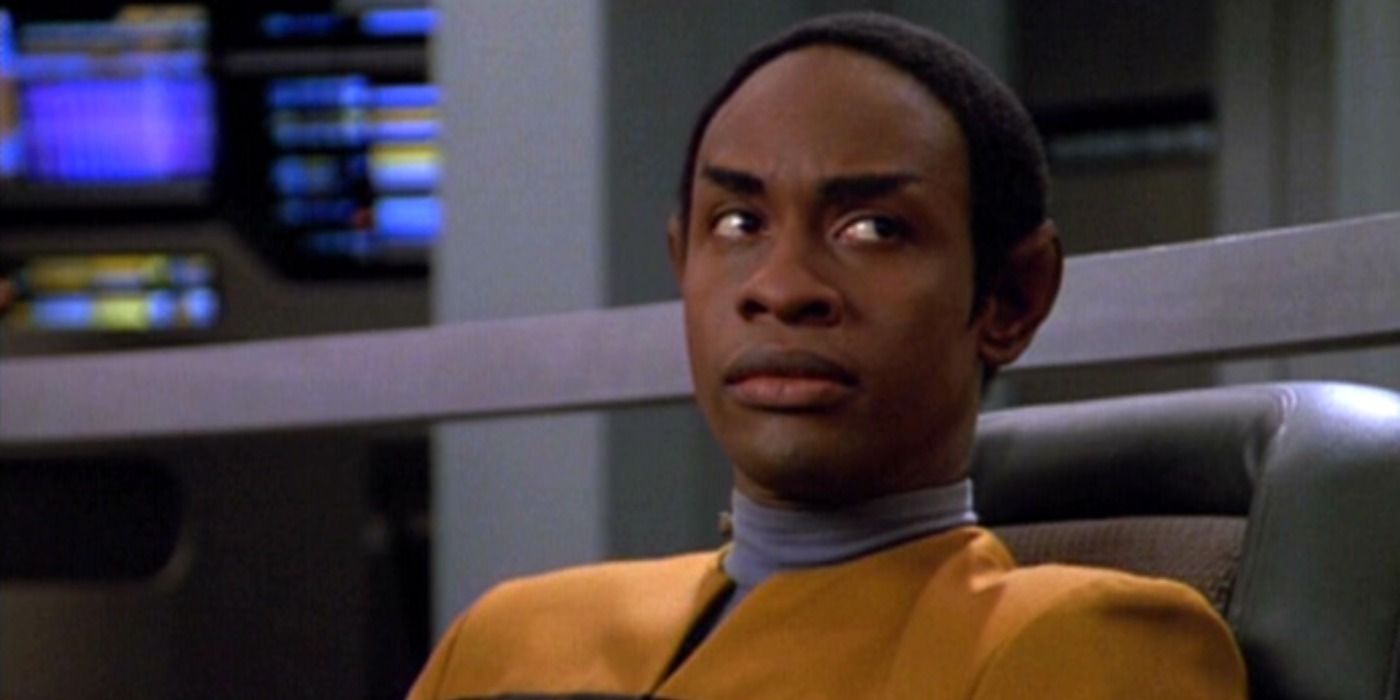
As the resident “token Vulcan” character, Tuvok is there to ground the crew in his logic, while also providing dry humour and situational comedy through his interactions with crew members. While he claims to be free of emotion, it’s clear through the runtime of the show that he’s a very sensitive person, using sarcasm, cynicism, and logic as defensive mechanisms. While he does form friendships in his time on Voyager, it never really feels like he develops as a character, which is a shame.
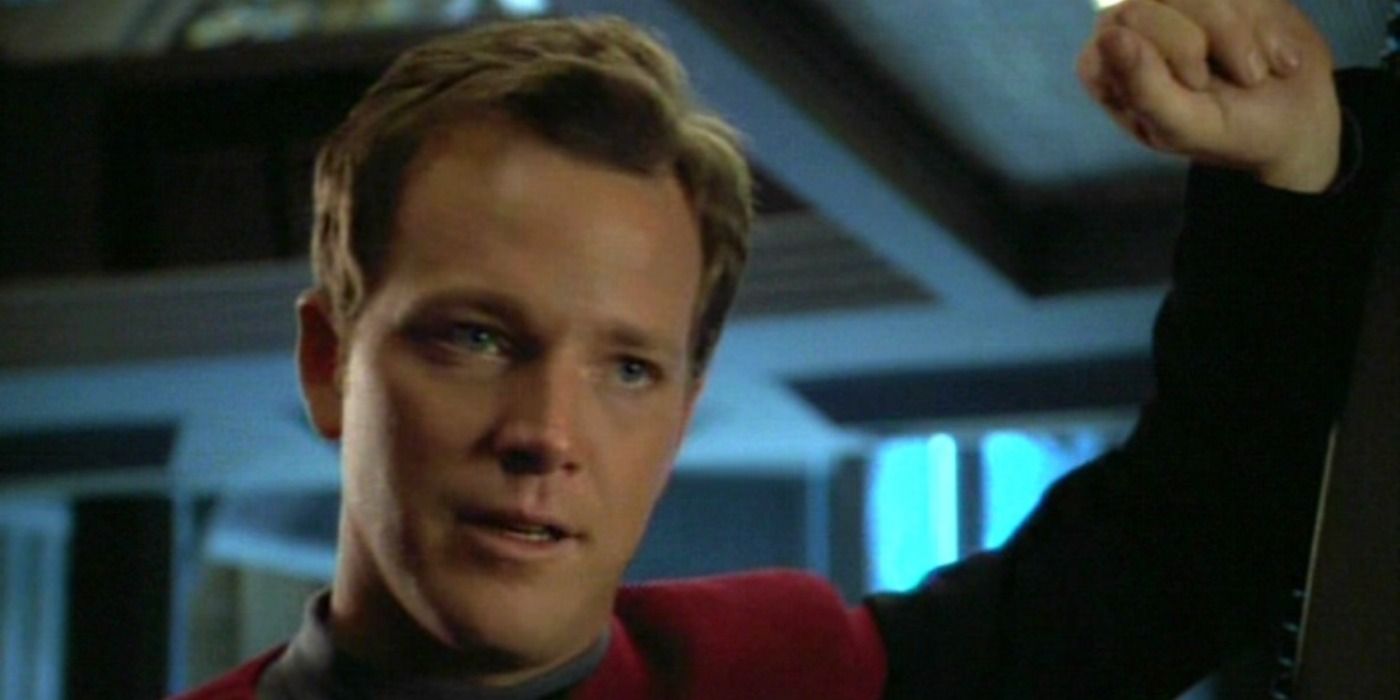
Of all the male characters on the show, Tom has to be the most interesting. He is introduced to the show as embodying the peak of toxic masculinity: a rude, doesn’t-play-by-the-rules fly boy reminiscent of Captain Kirk, Tom consistently proves he is a child stuck in a man’s body, driven by adrenaline and his ego. However, with the possible exception of the Doctor, Tom has the most character development out of the cast on Voyager. By the end of the series, he is a married family man with a child, respected by his crew and known for his creativity, enthusiasm, and sense of morality.
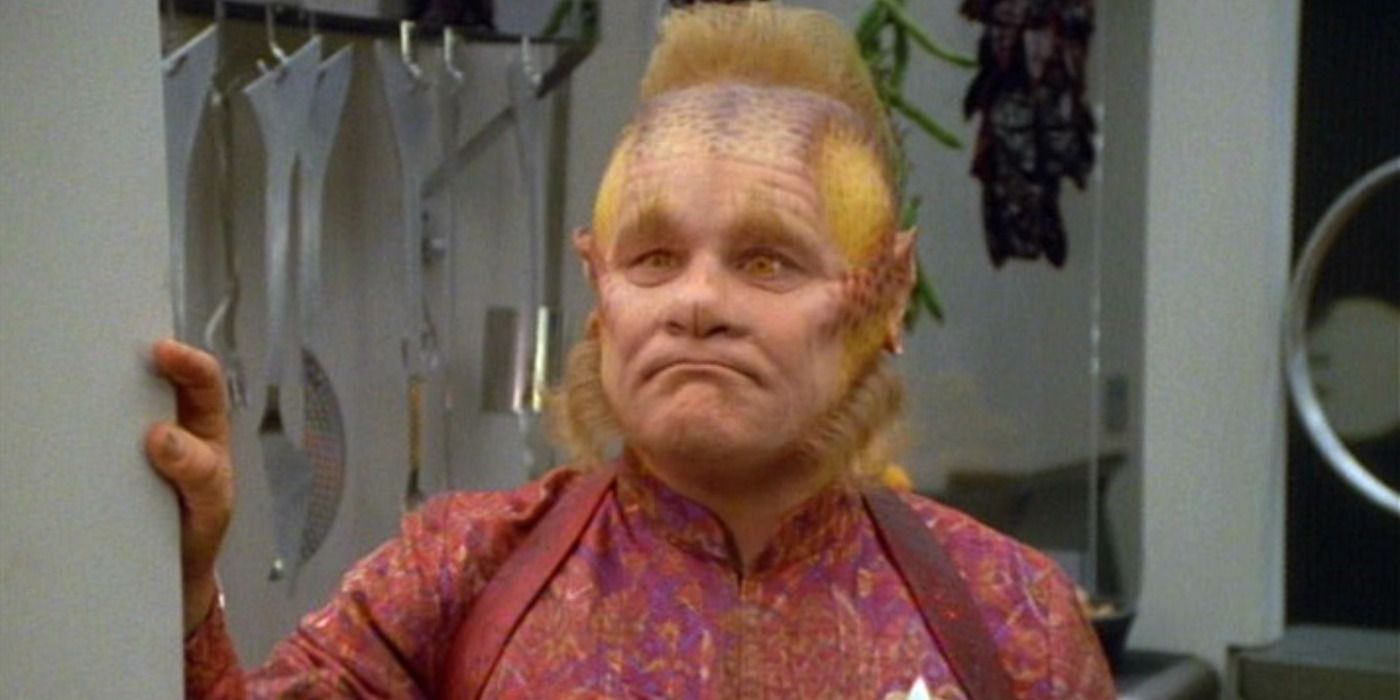
Neelix has to be the most annoying and problematic character on Voyager. Not only was he participating in the Born Sexy Yesterday trope with Kes in early seasons, he was constantly inserting himself into every scene and situation in very inorganic ways. His humour and general behaviour is grating, and doesn’t add anything of substance to the show. But once he discards the shackles of his relationship with Kes and his position as guide in season three, he becomes a much more likeable and complex character.
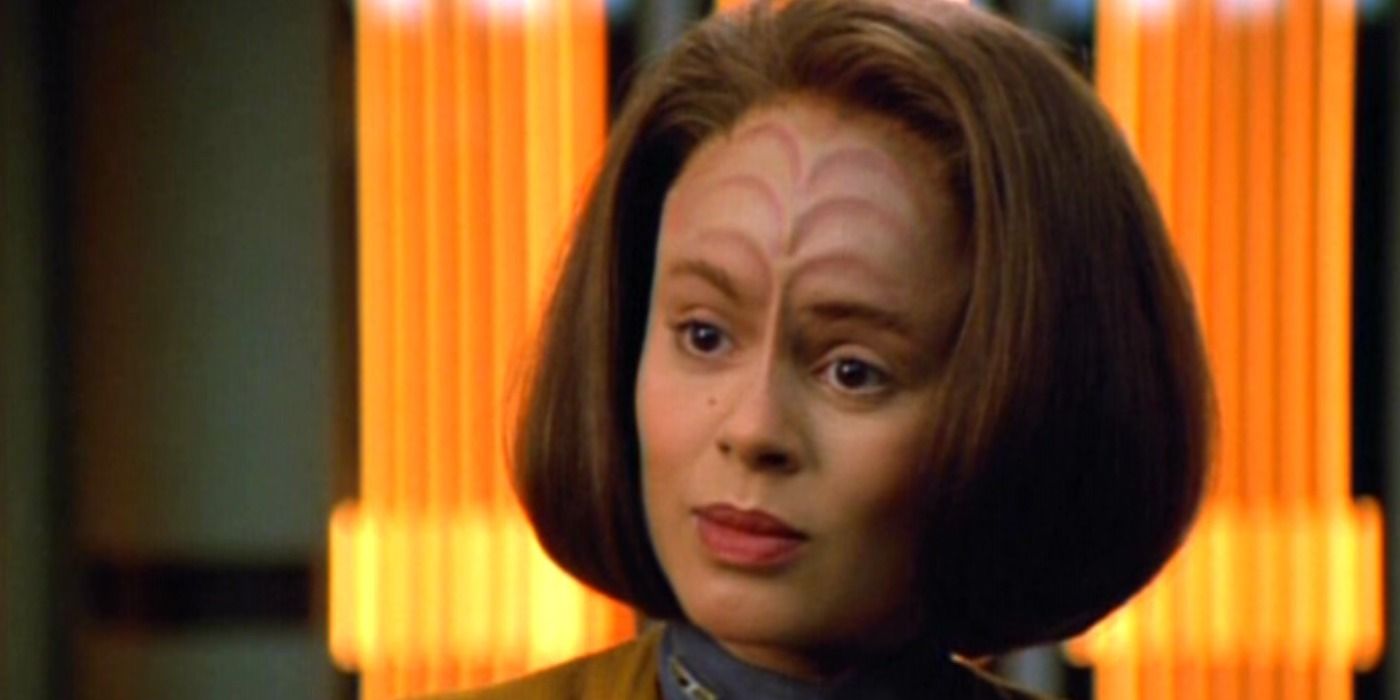
While I can appreciate B’Elanna’s character, she never really vibed with me. It felt like she was constantly angry for no reason, though this may come from my general dislike of the Klingon species as a whole. She is at her best when she is emotionally vulnerable or is demonstrating her scientific mind, though I often felt these moments were under shadowed by how stubborn and angry she became during interactions with other crew members.
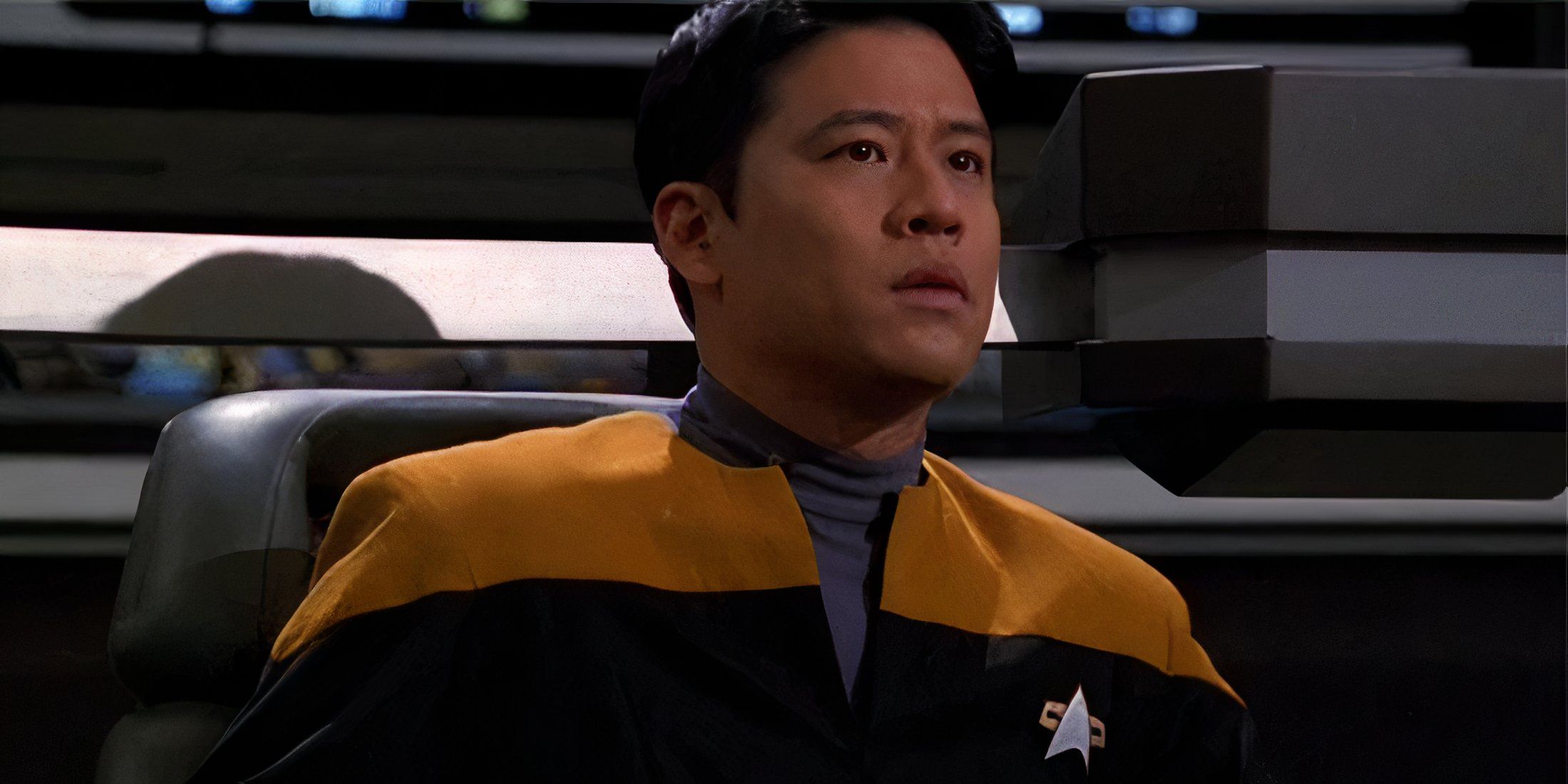
I can’t help but feel like Harry was done dirty by Voyager. Up until the last couple of seasons, Harry is treated as the youngest sibling of the crew on Voyager, coddled and spoiled, but never taken seriously. This made Harry always feel a little bland and uninteresting, even in episodes where he’s the protagonist. His constant optimism is refreshing, but I never really clicked with Harry in any meaningful way.

There was no love lost from me when Kes left Voyager. To this day, I don’t understand how the showrunners could justify sexualizing a character who’s not even ten years old. It’s the most flagrant use of the Born Sexy Yesterday trope I’ve ever seen and is basically paedophilia. It made any romantic interaction between Kes and Neelix or Tom incredibly awkward for me, especially if it involved sex or procreation. The fact that the Ocampa only live to a decade is not justification, as Ocampan physiology is just as fictional as any other aspect of the show. There was no reason to make them only live to a decade, except maybe for the strangeness of it. Beyond that, I found Kes’ soft voice and constantly calm demeanour annoying. I never really bought into her powers, as they always felt out of place within the scientifically-themed Voyager storyline.
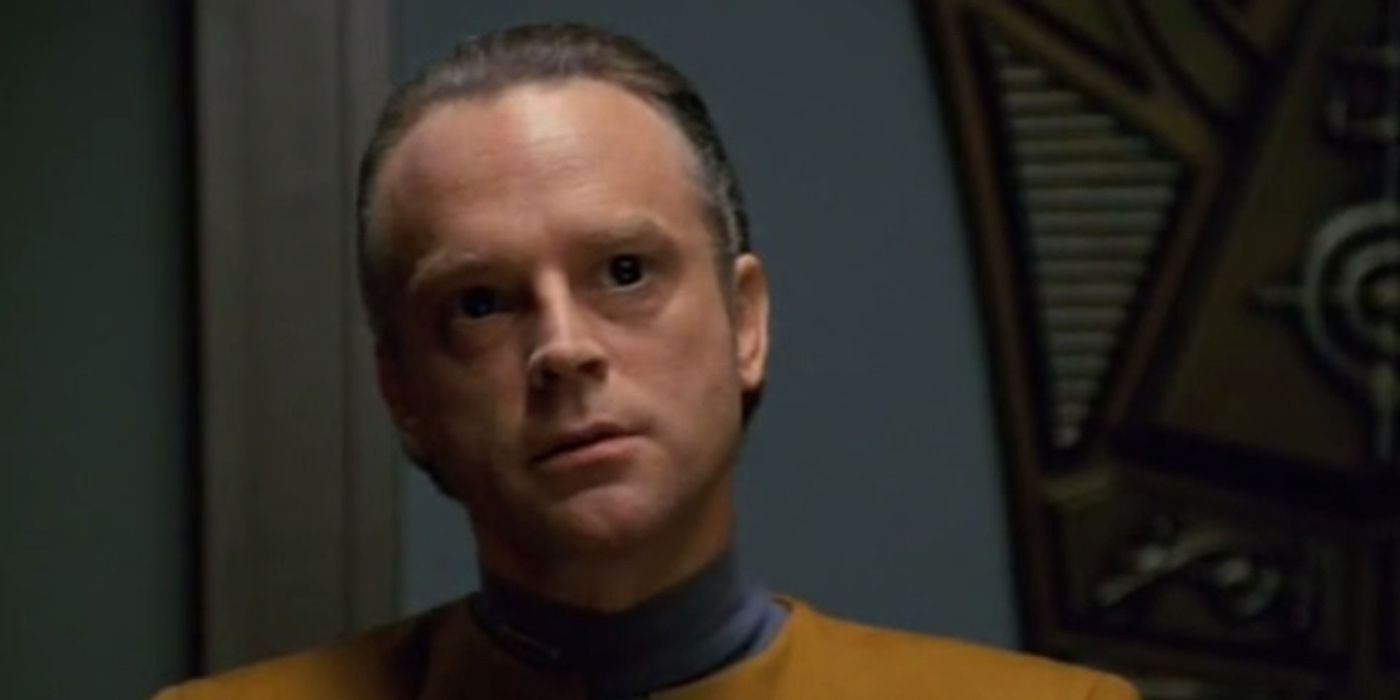
I’d also like to give a special mention to Lon Suder, whom I thought was a very interesting character for the short time he was on the show, and provided great representation for people with mental disorders. His interactions with Tuvok and the Doctor are some of the best in the show, and Brad Dourif does an amazing job of portraying a sociopath. It’s not clear what mental disorder Suder is actually suffering from, but it was most likely bipolar disorder.[2] His journey from murderer, to Tuvok’s foil and finally Voyager’s saviour is one of the best storylines from the show.
Voyager wasn’t perfect. While it did hold to feminist ideals, the show never really addressed racism directly, and it never really touched on sexual or gender diversity. In this way, Star Trek as a whole feels a bit old-fashioned. It feels a long time since the original series was heralded for being so bold as to have mixed race romance on the screen. But now it feels as if Star Trek at some point fell behind. It wasn’t until 2017 with Star Trek: Discovery that an openly gay couple was introduced.[3] That’s a long time for a franchise that prides itself on diversity, science, and exploration. In Voyager in particular, the heteronormative undercurrent of the show feels out of place, as if it’s inevitable for every man and woman to eventually pair off, marry, and have children. Star Trek should be better than that.
At first, when writing this retrospective, I was going to discuss my favourite episodes in the same way I did for the characters. But looking at the episode list online, I realized that almost all the episodes had something worthwhile to them. They either made me think about a scientific concept, or got invested in the development of characters, or just pulled at my heartstrings. And really, that’s the benefit of an episodic series like Star Trek. A lot of modern shows rely on a multi-episode, cross-season narrative to drive them—something I enjoy a lot. But there’s something to be said about older shows that had different writers almost every episode, exploring new ideas and new stories each time. Of course, Voyager does have a consistent narrative in the shape of the crew’s goal of returning to Earth. That is always present as you watch each episode, even if the crew is stuck in a nebula or visiting a paradise planet. One issue I had with Voyager’s episodes is that some can be more action-oriented, and less focused on interesting concepts or ideas. A little action is okay, and Voyager manages to do action scenes well, but it’s clear it’s not the show’s strength. This on its own was not enough to make me hate any episodes, but would make it difficult to justify a rewatch.
Voyager feels like a blip on the timeline for science fiction shows. When most science fiction either needs to be a blockbuster or focused on action, Voyager was a breath of fresh air for me growing up. Looking back on it now, I can see why it stuck with me, and why I have so many thoughts about it. So many, in fact, that I couldn’t fit them all into this retrospective. If I could, I would go through every episode, dissecting and discussing as I go. Unfortunately, I don’t have that kind of time. This retrospective alone took up more of my time than I expected. But I think Voyager would be worthy of such scrutiny. I can’t comment on other Star Trek shows. I’ve seen very little of The Next Generation, and only clips of the others. They just never grabbed me like Voyager did, with her female captain, breathtaking intro and diverse cast of characters. I just wish we could have more science fiction today that held the same principles that Voyager did, bringing them further than ever.
Select a result to preview