


Directed by Anthony Russo, Joe Russo
2018, Marvel Studios
2 hours, 29 minutes
Rating: ★★★☆☆
When I originally wrote this review, I was able to identify a disparity between the way Gamora’s death and Peter Parker’s death were presented, but I had not truly known the reason. In retrospect, the disparity is derived, at least in part, from misogyny. Knowing this now validates the uncomfortable feeling I had at the time.
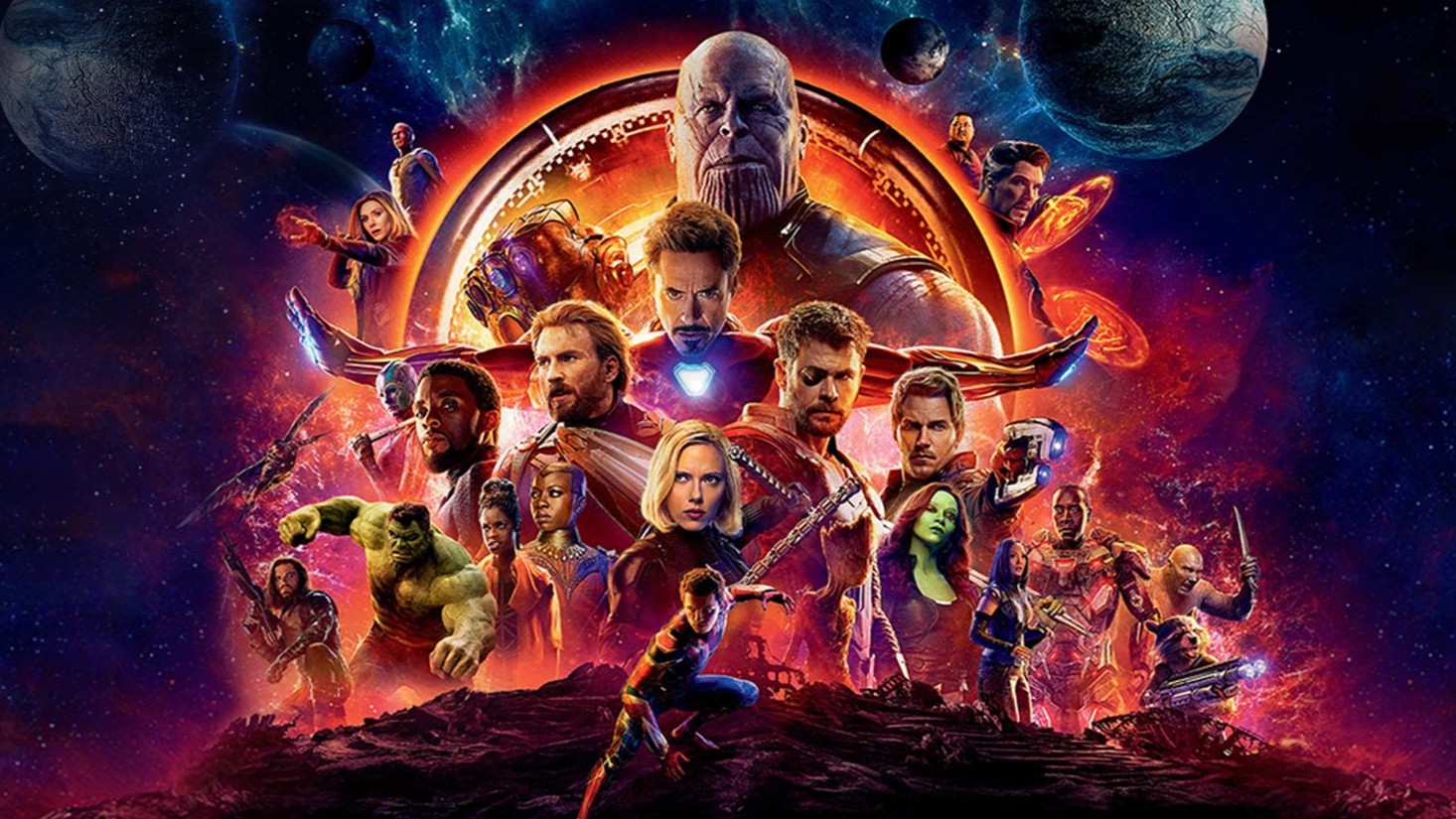
Avengers: Infinity War stands as a monument to how far the MCU has come, an event unlike anything else we’ve seen before. I have watched every major MCU release since 2008, excluding Black Panther (I missed it in theatres), and some of my favourites include:
I like these entries in the franchise as they either embrace the goofiness inherit to the genre, or they weave an interesting enough narrative within their runtime. To me, these entries in the franchise demonstrate the best of comic book storytelling in film. Infinity War aims to cap ten years of movies by teaming up the primary cast from all their major releases, while simultaneously retelling the Infinity Gauntlet story from the comics. Ultimately, I have difficulty pinning down how I should feel about the film, as it itself has difficulty establishing what it wants to be.
As evidenced by the plethora of television specials and comic book events already in existence, one of the staples of the superhero genre is the Team Up. Fans and creators alike love the idea of team ups, as they allow their characters to interact while facing a threat none could defeat individually. I would argue that the interactions between characters are what really make these team ups interesting, and this is where I believe Infinity War suffers. Despite being over two hours in length, the movie does not spend enough time developing the relationships it introduces. Scene after scene of quippy dialogue is certainly entertaining, but does not offer depth. Characters that have been developed over multiple films are flat and uninteresting in Infinity War, mere parodies of their true selves. If this was a television episode or a comic issue, I could accept this hand-waviness for plot reasons, with the assumption we will get to explore the relationships in future chapters. However, I don’t expect we’ll see more of these relationships beyond Infinity War 2. As they are now in the movie, interactions between characters are awkward, rushed, or inconsequential. I wish we had more time spent on developing relationships between characters, though this would most likely require the main narrative to take a backseat. While it’s not ideal, it would stop Infinity War from trying to have its cake and eat it too. It wants to tell a story, but also have an awesome superhero team up. Unfortunately, it can’t have both. In fact, I would have much preferred that the film had focused on the Thanos’ narrative, which I was surprised to have enjoyed much more than the team up.
When I first began seeing previews for Infinity War, I did my best to avoid spoilers. I also did not have any prior knowledge to the Infinity Gauntlet comic storylines. I dreaded that the film would be bloated with heroes, without enough time for their interactions to be meaningful. I was correct on this, though I still found their interactions entertaining for what they were. However, I can say I was pleasantly surprised by Thanos and his narrative. Per my experience with other cosmic comic villains in the past, I always imagined Thanos as a purple Darkseid: doing evil bad things because bad people do evil things. His previous appearances in previous MCU entries did little to convince me otherwise. He always appeared in a golden suit of armour atop a throne, giving orders to his underlings, flashing evil grins all the whole. Obviously, a change in direction took place for Infinity War, as Thanos is now a well-developed villain-as-protagonist, taking centre stage for the underlying narrative in the film. I found this incredibly interesting as it represents a complete reversal to how Marvel Studios has treated its villains in the past. And yet, I am still conflicted because Infinity War is not actually a movie—it’s a superhero team up event. Despite his narrative driving the film, Thanos often takes a backseat to the team up action. Again, I feel the movie suffers because of this lack of focus. What could have been a moving story about a man who believed he did the wrong thing for all the right reasons becomes a parody of itself. The emotional beats are there, but they have no impact. How Gamora’s death compares to Peter Parker’s is the best example of how the movie prioritizes the team up aspect of the film, while also lacking focus. [Gamora’s](https://en.wikipedia.org/wiki/Gamora_(Marvel_Cinematic_Universe) death is poorly edited, with an unsatisfying build up. On the other hand, Peter’s death is almost comical in its length, and does not have the impact I think the directors were looking for. This difference in emotional impact bleeds into the rest of the narrative, leading to an ambitious but ultimately incomplete narrative. Assuming we take Thanos’ story as the primary focus, I would have preferred more time spent on [Gamora’s](https://en.wikipedia.org/wiki/Gamora_(Marvel_Cinematic_Universe) death, while the “death” of the heroes at the end of the film could have been portrayed as them simply missing following Thanos’ victory. I believe if they had shifted the focus on the film, the Thanos narrative could have been the crowning jewel for the MCU’s first ten years. Instead, it takes backseat to Tony Stark and Stephen Strange’s married couple bickering. I can only hope we see more of Thanos in the second iteration, and—more importantly—I hope his story has more ground to stand on now that half the hero cast is dead.
The only other narrative I truly enjoyed was the Thor Stormbreaker storyline. And so I was happy when Thor finally made his appearance towards the climax of the event, shortly before Thanos arrives. Up until that point, I wondered when the heroes would stop the purple titan. When Thor arrived? When the Mind Stone was destroyed? Would the Time Stone be a fake? These questions went through my head right up to the point where Thanos wins. At the time, I was shocked. To see this kind of thing at the end of a mainstream film is unusual. The deaths of the heroes following the climax confirmed the effectiveness of his victory, though by the death of Peter Parker, it was clear none of this was permanent. And as I’ve learned more about the Infinity Gauntlet comic book storyline since my initial viewing of Infinity War, Thanos’ victory seems inevitable to me now. I think the way I felt at the time only reinforces how good this movie could have been if the focus had been placed on either the Thanos narrative or the Team Up. I was invested in the outcome, which is not something I can say about most stories. But the lack of focus left me conflicted as to how to feel about the film following my first viewing.
I enjoyed the ride while I was on it, but was left wanting more. And I doubt we’ll get another chance at a superhero live action team up again in the near future. I have not seen Justice League as of writing this—and based on the criticism it has received—I doubt I will. I do have hope that a story like Thanos’ may be done again in the future, with better execution. Whether within the MCU or not, a villain-as-protagonist story is interesting enough to warrant another shot. I don’t know if such a narrative would work without established heroes as the antagonists, but I can only hope for better.
Select a result to preview