


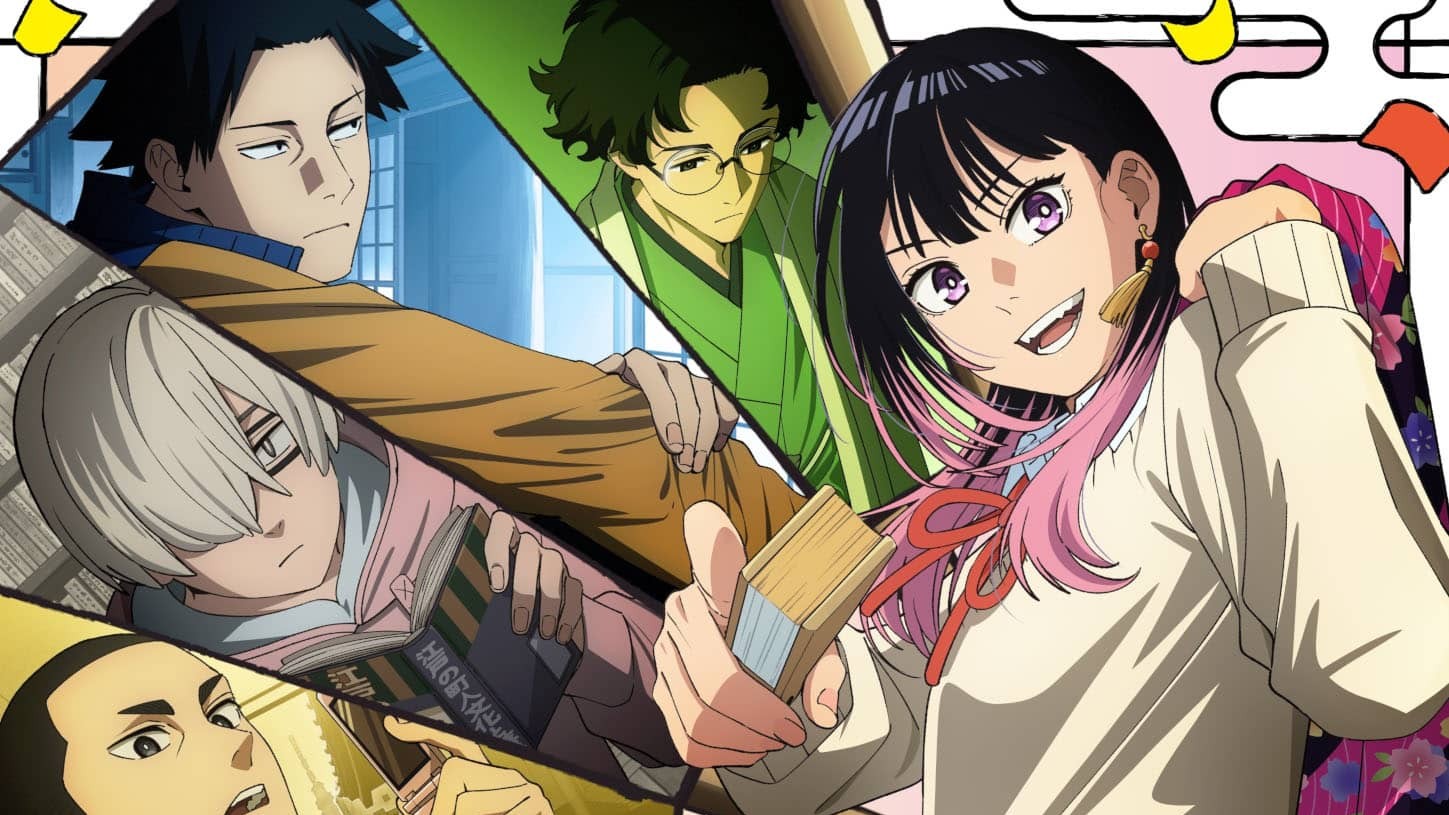
by Yuki Suenaga, Takamasa Moue, Ayamu Watanabe
2026, Zexcs
12 episodes, 24 minutes
Rating: ★★★★☆
I’m notoriously picky when it comes to anime. I find that its quality fluctuates widely, though I don’t think that’s really all that unusual. There’s a lot of anime, and so it’s inevitable that the majority of anime would be of poor or mediocre in quality. The same is true of any medium, really. There are only a handful of television shows, movies, books, and video games which I adore and believe worthy of praise. I believe Akane-banashi may become a favourite of mine for the anime medium someday. It was recommended by a friend, and we ended up watching the first season more or less as it came out on YouTube. I was pleasantly surprised that the show fit neatly into my tastes, from its visual presentation, to its tone and subject matter.
Anime tends to be over-reliant on tropes. While anime tropes have evolved over time—I don’t think nosebleeds, swirly-glasses nerds, or panty shots are as prevalent as they once were—modern anime is still very much reliant on its tropes[1], and I find that they frequently get in the way of my enjoyment of the story. I know that, for some, tropes are familiar and comforting—a way to quickly understand a story, its characters, and the world, to mitigate uncertainty and help one feel at ease with something new. Unfortunately, that just isn’t the case for me.
Akane-banashi also relies on tropes, but grounds its narrative in its characters and its world. I don’t know if the modern setting is the sole reason for this, though I do think it helps quite a bit. Characters are less likely to engage in outlandish activities if the most trouble they can get into is failing to study for an exam or losing their job. It doesn’t stop the characters from falling into predictable tropes, but it does help to make them feel more human.
While I enjoy its characters, I think was makes Akane-banashi great are its subject matter and its presentation. I had not been directly exposed to rakugo before Akane-banashi, though every culture has something similar to rakugo, wherein a lone storyteller relays a story to an audience, usually as a type of dramedy, leaning most often towards comedy. There are even modern examples in modern western culture, such as influencers on social media pushing out multiple episodes of a one-person show wherein they play multiple characters of the course of the series. Seeing how lone storytelling works in Japan—and how it’s still very prevalent as a form of entertainment—is a treat on itself.
Akane-banashi goes even further by elevating the art of rakugo, using stylistic and flashy animated sequences to bring home how impressive and uplifting rakugo can be for its rakugoka and the audiences they entertain. While it’s possible we could appreciate rakugo if presented plainly as it exists in the real world, I believe the show’s creators made good use of anime conventions to impart the passion involved in performing rakugo. Anime is at its best when it highlights the everyday and the mundane, and Akane-banashi fulfils this promise.
I do wish that the show would spend less time on expository sequences for its side characters. Though some of the side characters are enjoyable—Iwashimizu Machiko and Mamoru Mikuriya are particular favourites of mine—I think that the focus on the large cast of side characters erodes Akane Osaki’s position as the protagonist. While I know that exposition, flashbacks, and side-stories are common tropes in modern anime, most likely born out of the serialised nature of weekly manga chapters, I sometimes wish they wouldn’t bother. They also slow things down and add unnecessary padding for what is, otherwise, a well-paced story.
I’m excited to see what comes next for Akane-banashi. I’m unlikely to read ahead in the manga, as I hope that the anime’s stellar presentation and attention to detail will continue into its second season. Even its opening and ending tracks—Hitotarashi and AKANE On My Mind, respectively—are absolute bangers, contributing to the show’s tone and overall feel. Time will only tell if Akane-banashi will cement itself among my small, but steadily growing collection of favourites.
Select a result to preview