


Directed by Alfred Nguyen
2018, ThroughLine Games
PC, 8 hours, $22.99 CAD
Rating: ★★★★☆
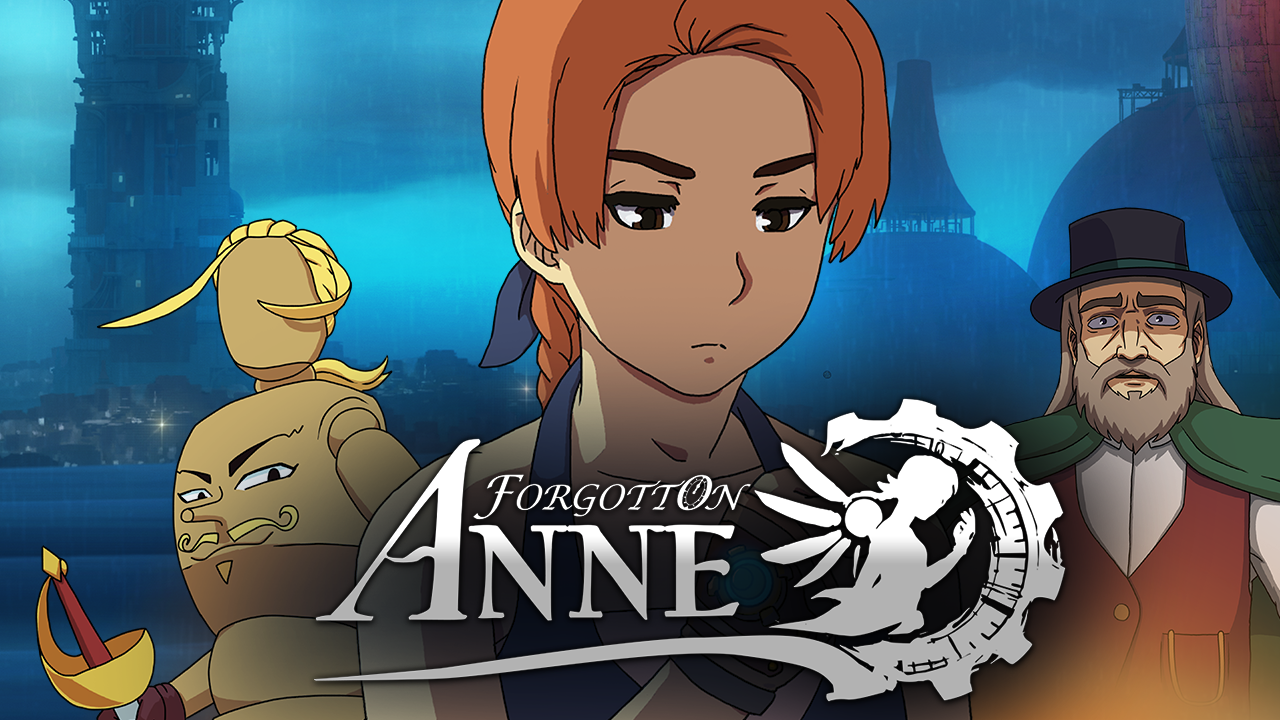
It’s apparent by the time the opening title appears that Forgotton Anne is trying to emulate Studio Ghibli. The art style, animation, sound design, voice acting, and even one of the branching narrative paths could be lifted directly from many of Miyasaki’s films. In that regard, ThroughLine Games has done a good job of capturing the feel of a well-produced animated film, including—to my surprise—periods of rest. While I would consider this padding in other games, it’s clear these moments of calm are intentionally placed following intense emotional events for the purpose of introspection. Forgotton Anne also brings something new to the Miyasaki formula with the choice to react to characters and events in ways uncharacteristic of protagonists in these kinds of narratives, and a fresh western perspective on common themes. I’ll have to admit that when I was first mulling critique of the game, I had not yet completed the story. When I was nearly three-quarters through the game, it felt as though the reveal near the midpoint lacked substance. But now, I believe any issues with the story actually lay in how its pacing and tone is deeply affected by the medium it was presented with. Having said that, I still want to review some of the issues with the Plant reveal, and some ways to make the midpoint of the game much more interesting to match the importance the game director seems to have assigned the event.
From the moment I was given the choice to kill a Forgottling rebel using the Arca, I realized that this meant that the same energy powering the buildings—Anima—was also giving life to the creatures in the world. In turn, I was able to deduce that the Anima used to power buildings, appliances and such must either come from the same source that gives life to the creatures, or it comes from the creatures themselves. I could not be certain what was actually the case until Fig wants to show Anne the Plant, which had been introduced near the very beginning of the game. Fig’s request made it obvious that the creatures were being harvested to provide power to the city or the portal to Earth, and made it so Anne’s eventual disillusionment had no impact on me. The feeling was very similar to solving a puzzle in your mind, then spending a tedious amount of time actually enacting the solution. There was no satisfaction in it, and made the following narrative feel forced.
What I find disheartening is that this could have been resolved rather easily by referring to the energy powering the buildings as different than the energy giving life to the creatures. They could even have been coloured differently. Everything else in the game and story could have remained the same. Anne’s Arca could have still been used to distil Forgottlings while being able to power appliances, and a character could have explained that the Arca can control any kind of energy. Perhaps even remove any hints regarding the Plant until Fig brings Anne there, as the fact the Arca can be used on both energies is enough of a hint on its own. In fact, another story-driven game already did something similar. In Final Fantasy VII, the player eventually learns that the power source used by the inhabitants of the world is the “soul” of the planet. Extractors literally suck spirit energy out of the ground and refine it into Mako energy to produce electricity. Arguably, there are some issues with how Square Enix presented the reveal in that game as well, but the concept sticks with me to this day.
And yet upon completing the game, I don’t believe the reveal to be that important in the long run. I still believe it to be wasted potential. Obviously the writers thought the moment had enough importance to have Anne experience an emotional breakdown and lose her wings, leaving the player for the remainder of the game with lowered mobility. Originally I thought the writers simply could not decide what the reveal should be: Is it surprising? Is it a moment of empathy for Anne? Is it just a visual set piece? Perhaps at one point it was the first, and we were meant to feel shocked such a thing would happen. Maybe due to changes in focus—as happens frequently in video game development—the event was reduced to a plot point. In hindsight, I don’t think this affects the quality of the narrative. However, in the moment, it can be jarring and take away from the experience.
Despite my criticisms of the narrative, the strength of the game lies really in its presentation. I was impressed throughout the game by its visuals, the worldbuilding, the animation, the sound design, the music, and the voice acting. I think the best examples of this follow the events at the Plant, when Anne enters what is referred to as the “First Forgotten Memory”. We can really see how the medium shines in this moment, as concept after concept is thrown at the player to simulate a disorienting, surreal environment where reflections and shadows can simultaneously help you find your way and confuse you. I also think the writing in this section is above average when compared to the rest of the game, with the ending being a close second. I believe this section of the game also taps into what has made Studio Ghibli the standard of quality when it comes to Japanese-style animation. Miyasaki has a knack for blending the surreal and fantastic with believable characters. Most of Forgotton Anne attempts to emulate this formula, but it’s not until this chapter that it really feels like the writers were able to capture that feeling completely.
As I have accepted some of the issues with the narrative, I think the only thing that really detracts from the experience is the game itself. Here are a few of the issues I had during my playthrough:
I don’t believe these make the game bad, but they do make the process of advancing the story much more tedious. Puzzles and platforming also tend to lessen the impact of narrative moments and often change the tone drastically. I think this more than anything makes me want to experience Forgotton Anne as a film rather than a game. There were too many times during my playthrough that I was taken out of the experience by the game, and lost investment in the narrative as a result.
Overall, I enjoyed my time with Forgotton Anne. The narrative needs to be fully experienced to be appreciated, which I think is sometimes difficult due to the interactivity inherit to the medium. But the presentation is what makes the game worth a playthrough, as ThroughLine Games does a decent job of capturing the look and feel of a well-produced animated film. I’ll be excited to see what else ThroughLine Games produces next. Hopefully they make something similar to Forgotton Anne, though producing a game like this can take a very long time.
Select a result to preview