


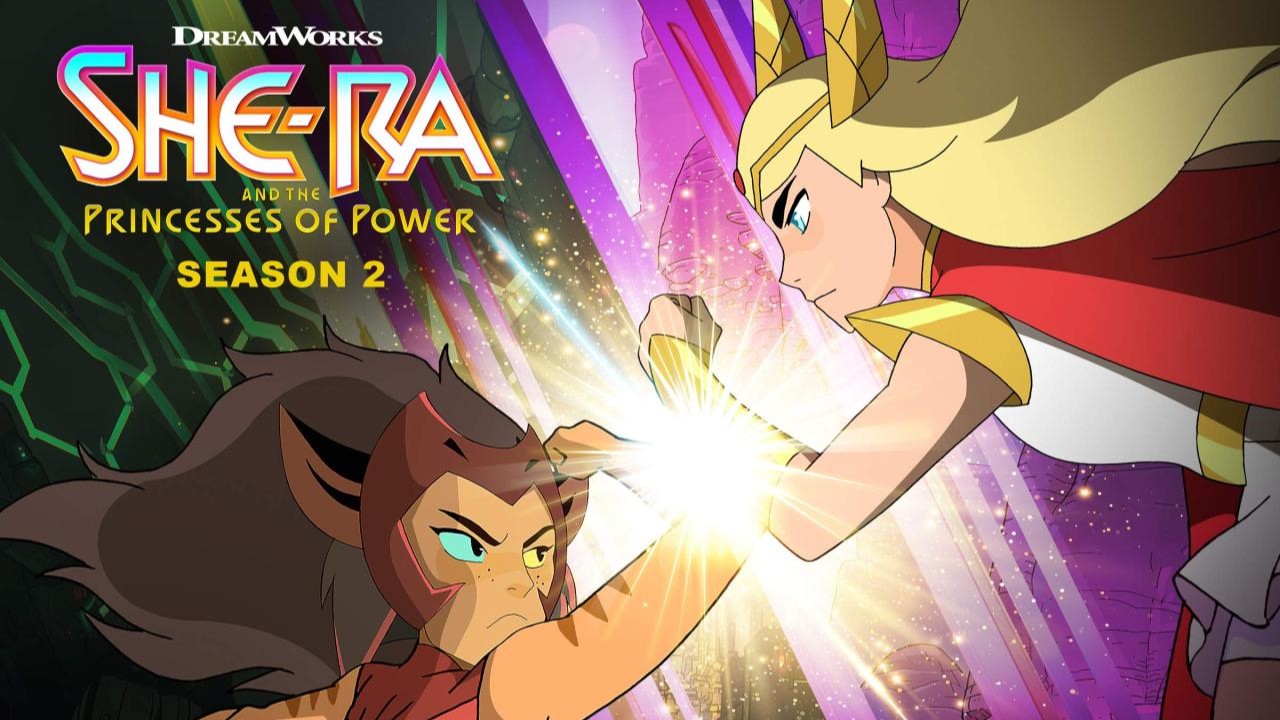
Developed by ND Stevenson
2019, Netflix
8 episodes, 24 minutes
Rating: ★★★★★
Much like my experience with the second season of The Dragon Prince I was excited when I saw that the new season of She-Ra and the Princesses of Power had dropped on Netflix. I immediately binge-watched its entirety, and I am happy to say that the show remains consistently high in quality, though it still holds the same flaws it had in the first season. Diversity, character writing, and relationships continue to be highlights of the series, with characters being even more grounded and complex than they were previously. Worldbuilding is still She-Ra’s weakest element. It feels like the writers may have realized this themselves, as they have focused their efforts on character interactions and relationships, and tabled any significant worldbuilding. Considering that there hasn’t been much change in the show’s quality from the first season, I don’t have a lot to say that I didn’t cover in my previous review. The ending was a tad disappointing as it ends on a cliffhanger, but I understand that the next season is coming out in August of this year, so I’m willing to let that go. I think all I’ll do for now is list my favourite episodes from the season, which coincidentally happen to be the last four out of eight episodes.
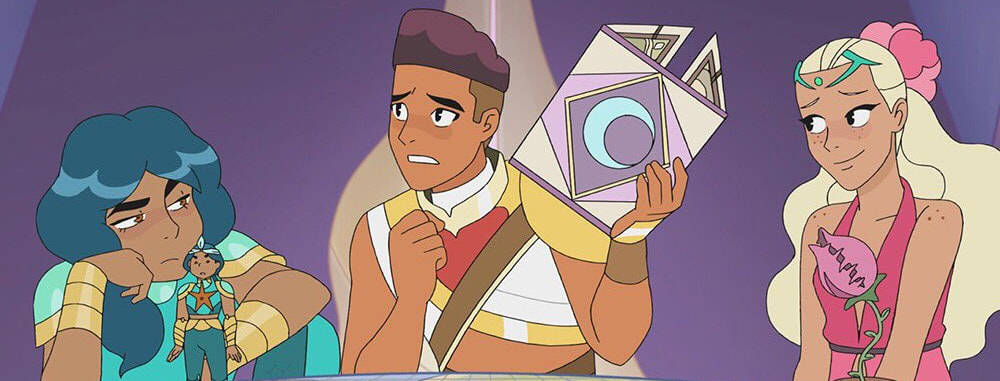
I did not expect a D&D episode from She-Ra, but I’m glad it’s there. It was a blast seeing the characters engage in tabletop RPG tropes. I’m also a big fan of having various different animation styles contained in one episode, so this episode was a good time all around. I especially enjoyed Bow’s perspective. Seeing all the modern incarnations of the characters in their old timey, Masters of the Universe costumes had me laughing the entire way through. The sub-plots were also fun, though the best part was definitely the tabletop goofiness.
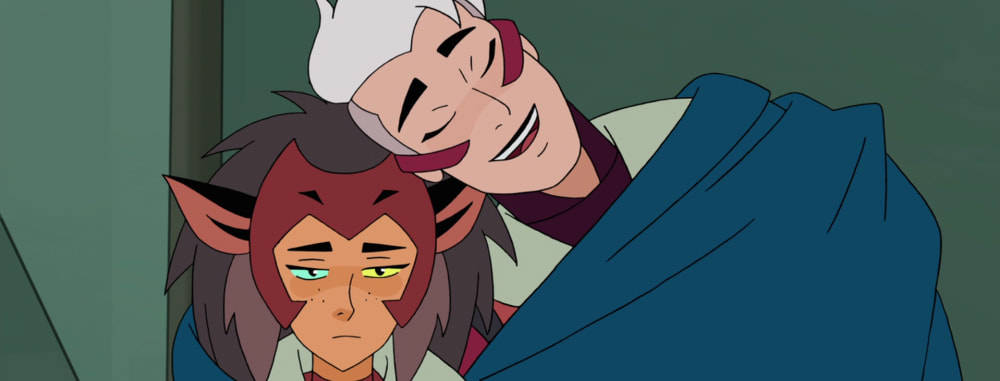
Two things made this episode stand out in my mind. The first is Scorpia’s struggle to get closer to Catra, and the second being “drunk” Adora. The writers show how funny they can be when “drunk” Adora is on screen, as her absurd behaviour leads to some great moments. As for Scorpia, it was nice to see her as more than a bumbling sidekick, and for her affections to finally get the attention of Catra after all this time. We’ve yet to see this develop further, but here’s hoping we get to see more of Scorpia’s development in the next season.
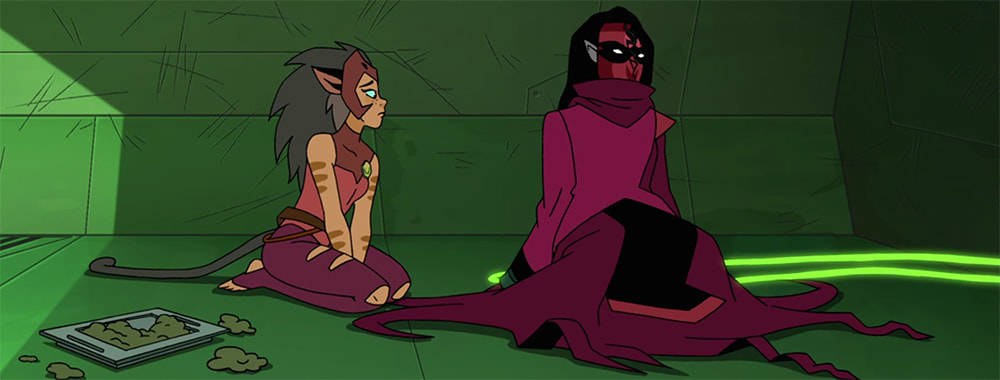
While it was nice to finally experience Shadow Weaver’s origins, I think seeing Catra becoming close to—and then ultimately being betrayed by—Shadow Weaver is one of the most emotionally charged moments in the series so far. I was right along the ride with Catra, allowing myself to think that Shadow Weaver may want to genuinely connect with Catra. And so I also felt the pain of Shadow Weaver’s betrayal that Catra felt when she realized that Shadow Weaver had used her once again.
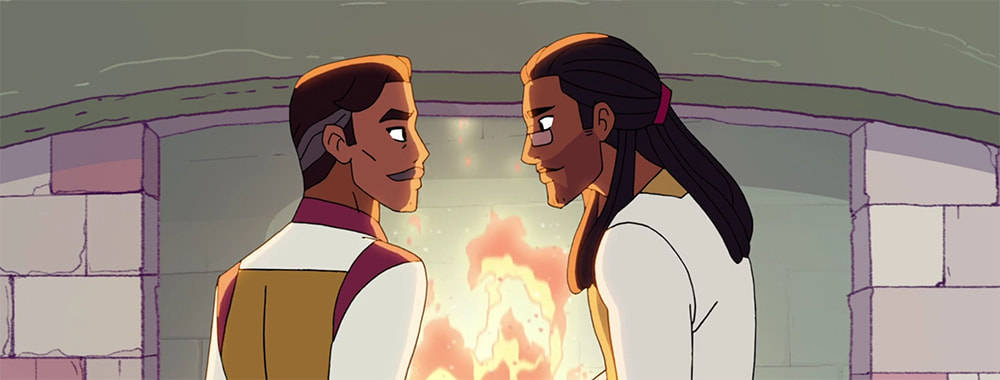
I think I can sum up this episode by what Glimmer tells Bow shortly after meeting his dads, something along the lines of: “Your dads are super normal”. I don’t remember the exact quote, but this reinforced in me that the writers are really pushing for diversity—but more importantly—a diversity that is seen as ordinary, routine. Though I can’t comment on whether Bow’s dads are a good representation of gay men, I’m just happy that we have any kind of representation of homosexual men, as it was one of my only criticisms from the first season.
She-Ra and the Princesses of Power continues to be one of the best modern cartoon shows: for its diversity, character writing and character relationships. This season feels like a stop-gap until the next season comes out in August, and I can honestly say I’ll be waiting in anticipation until then. The writers and showrunners behind She-Ra are doing great work, standing as a shining example of what cartoons in modern times can achieve. I know I’ve mentioned it before in my previous review, but I hope this is not an isolated phenomenon. We need more stories like this—stories that teach that differences between people are normal, and not something to shun or be afraid of. So many television shows—especially those aimed at children—are built on damaged societal norms that indirectly harm people of colour and members of the queer community. She-Ra shows you can have a fun series that pushes diversity, and even uses that diversity to its advantage to create interesting characters and stories, without preaching to its audience in the process.
Select a result to preview