


Directed by Bob Persichetti, Peter Ramsey, Rodney Rothman
2018, Sony Pictures Animation
1 hour, 57 minutes
Rating: ★★★★★
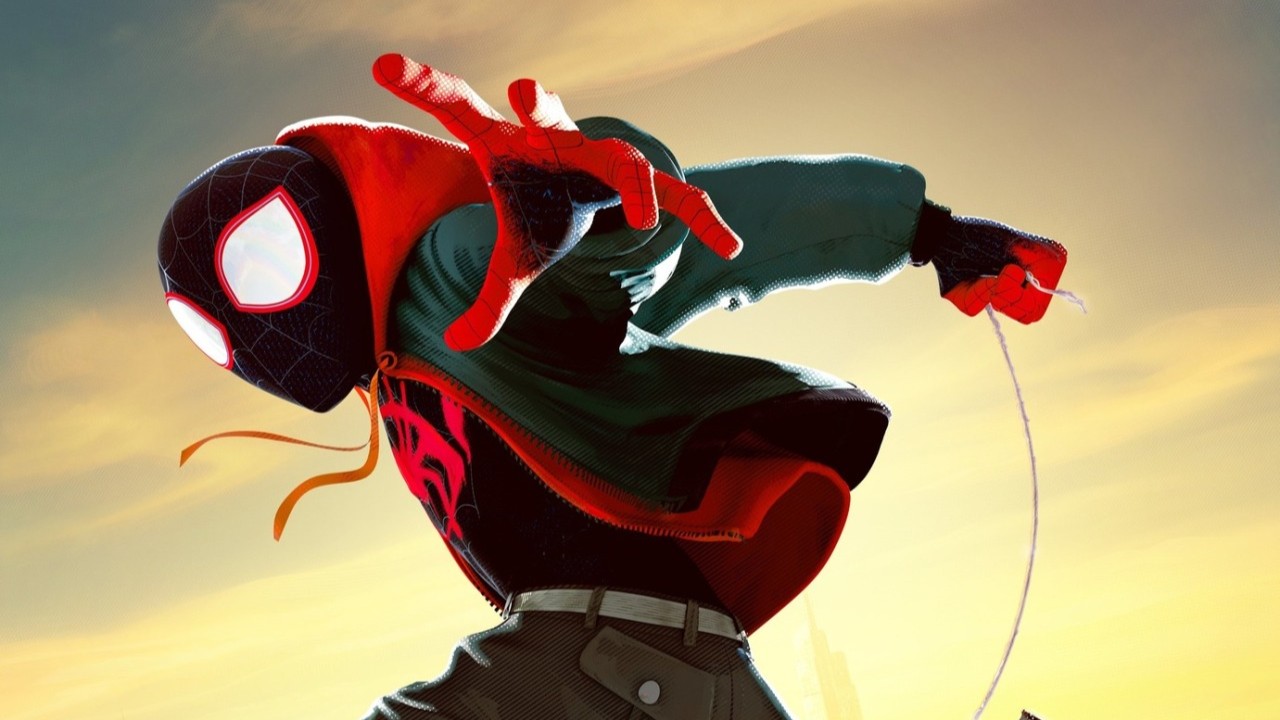
Maybe I should know better by now, but Spider-Man: Into the Spider-Verse was another one of those things that I initially figured I wouldn’t enjoy. On the one hand, I was seeing a lot of praise for the movie from Tumblr, podcasters and friends. On the other hand, the reduced frame-rate 3D animation and crossover plot line gave me some doubt I would be able to enjoy it. Crossovers always feel tacky to me. Fun, but tacky. In my review for Avengers: Infinity War, I mentioned feeling overwhelmed by the amount of characters and felt the directors were asking too much suspension of disbelief from the audience. Likewise, my experience with The Dragon Prince: Season One left me wary of limited frame-rate 3D animation styles. However, Spider-Man: Into the Spider-Verse surprised me, though I still found the crossover plot line tacky, and I’m not sure if I like this style of animation still. What did surprise me is how good the movie’s direction is, as well as the amount of style the creative team was able to imbue into the film. The writing is funny, touching, and surprisingly mature. The visual style is energetic, urban, and fast. Perhaps it’s my 90s upbringing informing my style choices, but Into the Spider-Verse expertly presents a kinetic, urban style in its visuals, music, and storytelling that I can’t help but to find appealing.
I can feel the passion and creative freedom the creative team must have had while working on Into the Spider-Verse, leading to some great scenes and amazing visuals. However, I think there is room for improvement. As of writing this review, I have watched this Into the Spider-Verse twice: once in the theatre, and once at home. I would have liked to have seen it more often in theatres, but circumstances at the time prevented me from doing so. I initially began outlining and drafting this review after my first viewing, but I’ll be honest that some of the scenes and much of the plot was far too fast-paced. It rarely feels like you have a time to breathe. Even in moments that should be breaks from the narrative—like Miles’ traversal of New York near the end of the movie—are fast-paced, visual spectacles that are exciting and engrossing to watch, but don’t give the audience much chance to breathe. Perhaps I am just getting old, but some of the action scenes were also difficult to follow, with the issue compounded at times by the reduced frame-rate animation. A good example is any scene with the Green Goblin. He takes up so much space on screen and moves so quickly that everything quickly becomes a blur. I don’t know if the fight choreography is to blame or if it’s the animation, but I found myself having a better time with fights that were slower paced and had more focus on impactful moments than on crazy acrobatics and explosions.
Or maybe my issues with action scenes come from the large amount of characters included in Into the Spider-Verse. I understand that part of the appeal of this kind of movie is having a large cast of characters teaming up to fight together, but I think that the writers sacrificed some of the emotional impact of the narrative for the sake of having a crossover event. As mentioned in my Avengers: Infinity War review, crossovers are the holy grail of comic book media. They’re a chance to see characters you love interacting, or—in the case of Into the Spider-Verse—seeing many different interpretations of a character you love interacting. One of the only episodes I can remember of the 90s Spider-Man cartoon was the one where multiple Peter Parkers from different dimensions team up. There’s just something about seeing so many different versions of Spider-Man in one place that makes it memorable. Into the Spider-Verse is even better in this regard, as the cast is much more diverse, with only two-and-a-half Peters complimented by four non-Peter characters. There is also a decent cast of villains, almost as many as there are Spider-People. That being said, I don’t think the cost of having this many characters in one movie was worth it. I think time would have been better spent on developing Miles, Peter, and Gwen, rather than on giving screen time to three other Spider-People, whose only purpose seemed to be comedic relief. Even the writers seemed to realize this as only Gwen, Miles, and Peter ever have any kind of character arc, while Peni, Peter Noir, and Spider-Ham are played for jokes or—as is the case for Peni—flat emotional moments. The writers could have easily left out Peni, Peter Noir, Spider-Ham, Scorpion, Green Goblin, and Tombstone with no impact to the narrative, and I believe the story would feel much more focused as a result. Would the movie have been less fun? I don’t think so. While some of the scenes with these characters were entertaining, I think the other characters would have stepped up to fill the space.
When I think of the best scenes in the movie, they are the interactions between Gwen and Miles, or Miles and Peter, or Miles and the Prowler, and so on. I understand what the creative team was trying to do, but I think they fell into a few of the traps that plague crossovers like this. For example, there’s the scene where the Spider-People all gang up on Miles, or all of them try and fail to stay hidden from Miles’ roommate. There’s an expectation that these kinds of scenes are necessary in crossovers, if only because of the awkwardness of having so many characters on screen. It’s as if we have to forget for a moment that these are real people in service of eliciting some kind of emotion from the audience. What this results in is these scenes being played for laughs instead of furthering the plot or contributing to character development. The same can be said for the running gag of the comic-book style origin stories. While always visually interesting, the skit had become old by the time the last three Spider-People were introduced. I think it would have been much more interesting if each character had their own style of introduction, especially since the first introduction fit young Peter Parker so well. Old Peter Parker’s introduction was lacking in contrast, and felt like it didn’t fit his character. Again, I understand what the creative team was trying to do, but the running gags and repetitive elements detract from the overall work.
On the whole, I enjoyed some of the more comedic character interactions, but I wasn’t a fan of the straight-up jokes and pop culture references. Something like Miles humming along to his music is genuinely funny to me, but Spider-Ham as a whole was wasted on me. Similarly, duplication and recursiveness seem to be intentional themes, leading to some great emotional moments, but also making some moments cliché or a slog to get through. To use an earlier example, I don’t think that it was necessary to have voice-over during Miles’ trek through New York City near the end of the film. It could have been a moment for the audience to reflect on how far he’s come. Instead, we’re subjected to a summary of his character arc, perhaps in the hopes of drumming up dramatic tension as the climax approaches. I need to reiterate that I understand what the writers and the rest of the creative team was going for. I truly think that Into the Spider-Verse is an amazing film, with great character writing and stunning visuals. I just want this kind of movie to reach its full potential and I think the best way to do that is to focus on great character interactions and moments, rather than on trying to force dramatic moments or funny scenes with a wide cast of characters.
I’ve spent a lot of time criticizing this movie, but it’s only because Into the Spider-Verse is unquestionably good. The visual style is both very reminiscent of comic books and of urban street art. I’m particularly partial to these styles myself, so I thoroughly enjoyed all the visuals in the movie. And while Peni and Spider-Ham were a little jarring, I can appreciate the work put in to making them stand out. Most of all, I think that the visual style fit well into Miles’ character, making it clear that this film was about him and not Peter Parker, or about all the Spider-People combined. It’s a reflection of his artistic intent and culture—and while I can’t say I identify with the latter—I felt instantly connected to Miles’ on the former, as I’ve had to often forego my creative drives in the face of responsibilities forced upon me in my youth. I also really enjoyed how important music is to Miles and to the narrative. I’m not a fan of lyrical hip-hop, so I appreciated that much of the music in the movie was instrumental. I have grown to slowly love this genre of music. I’m not entirely sure what it’s called—who knows how to categorize music these days anyway—though I’m pretty confident in describing it as lo-fi beats and hi-fi beats, depending on the music’s tempo and intensity.
With that in mind, one of the staples of this genre of music seem to be high-intensity music stingers like record scratches or sudden explosions of sound. I love how the music has a focus on creative expression rather than on creating an easy listening experience. This has led to the Prowler’s theme being my favourite track from the score. From the moment I first experienced the heart-pounding chase sequence where this track was featured, I knew I would have to find the specific stinger used to announce the Prowler’s presence. That whole sequence is etched in my memory thanks to the track alone, which speaks to the power of Into the Spider-Verse’s soundtrack. It works with the movie instead of acting as a simple backdrop, reminding me strangely of the video games I grew up with instead of modern films. Too often movies go the safe route, opting to use pop songs to accentuate moments and then have the rest of the score simply fade into the background. Into the Spider-Verse shows what a good soundtrack can do, helping to accentuate action, emotional moments, and even comedic scenes.
And I did enjoy a lot of the comedy in this film. I can’t remember the last time a movie had me smiling and having a good time throughout. The writers managed to capture what it’s like to be an awkward teen, without satirizing teenagers in the process. Sometimes the writing does cross the line, but for the most part I found myself suspending my disbelief in favour of having a good time. Overall, the writing is superb, with specific care given to character growth for Miles and older Peter Parker, though Gwen has some minor character development near the end of the movie. I think Miles’ arc is very well done, and stands as a good example about how to write good character. The writers’ approach his story and the story of those around him in a surprisingly mature manner, despite some of the more ridiculous aspects in the movie. His parents act like real parents, and not like parents we would normally see in this kind of story—namely, the absent-minded, get-the-out-of-the-way parents that seem to permeate children’s media. I also think the Prowler’s prominence in the narrative and what he means to Miles is what really makes Into the Spider-Verse so compelling as a story. The Prowler simultaneously symbolizes Miles’ fear of failure and his need for creative freedom. It’s just good writing. I hope we can see more of the same in similar future projects.
Spider-Man: Into the Spider-Verse is a strange but wonderful step in the right direction for blockbuster superhero films. The industry is overflowing with superhero films these days, but most of them don’t venture far from the Marvel Cinematic Universe formula. It’s refreshing to see a film really push the boundaries and try something new, while also helping to promote diversity in its casting. I do have some issues with Into the Spider-Verse. It’s not a perfect film, as it relies on some clichés and suffers from crossover sickness as much as any other piece of comic book media. These issues are minor though, and I’m willing to suspend my disbelief when in favour of the overarching narrative. The after-credits teaser seems to hint at a sequel, though I’d much rather it stay as a joke so that we can get an entirely new experience in the future. I wonder what could be done with Thor, Doctor Strange, or even Hawkeye with this approach to comic book storytelling. It might be wishful thinking on my part considering the state of Marvel at the moment, but the success of this film should stand as an example of what can be done with superheroes in the future.
Select a result to preview