


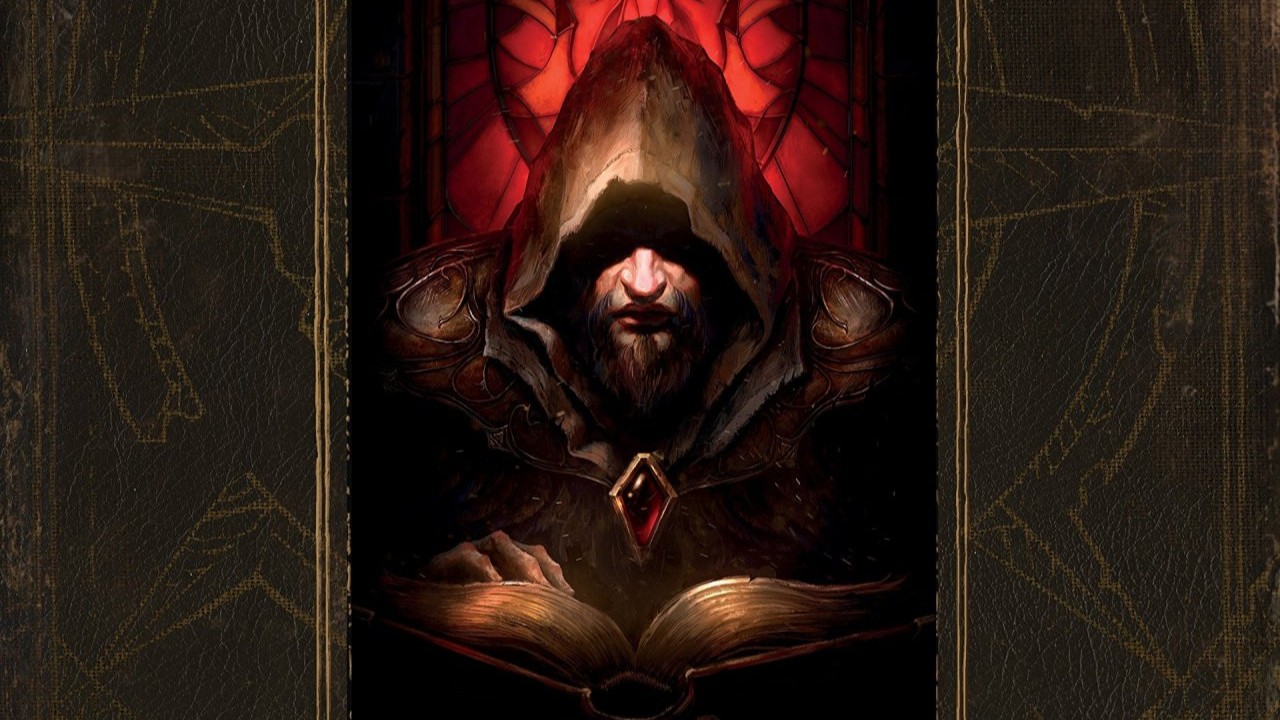
by Chris Metzen, Matt Burns, Robert Brooks, Peter Lee, Joseph Lacroix
2016, Dark Horse Books
Hardcover, 184 pages, $39.99 USD
Rating: ★★★★☆
I was rather ambivalent when the first World of Warcraft: Chronicle volume was release two years ago. I had wanted for so long for Blizzard to codify their Warcraft lore in a way that brought order and sense to the sprawling story they’d built over twenty-five years. However, it was released as I was leaving the game and I didn’t have the spending money to purchase it. Now that I’m playing again, and I have some spending money, I decided to buy all three volumes currently available. As of writing this review, I have not read the second or third volume. I wanted my opinion to be restricted to this volume for the time being. The first volume in the Chronicle does a good job at what it sets out to do: it tells the lore of Warcraft in a storybook-esque format, allowing fans of the universe to experience Warcraft lore from beginning to end as a narrative. However, there are few issues with it that I can’t ignore. Most of these issues I can attribute to a lack of quality control as they could have been easily resolved with rigorous revisions, or at least with some more solid decision-making from the creative team in charge of Warcraft lore.
The most obvious failings in the volume are its maps. I can forgive that they have already become outdated as of me writing this review. Blizzard will inevitably release new locations in upcoming expansions that will change the layout of the world map. What I can’t excuse is how confusing some are and how some maps are missing from key moments in the lore. If the purpose of these maps is to give a visual representation of the world, then it misses some steps. Most readers will be familiar with the current World of Warcraft world map.
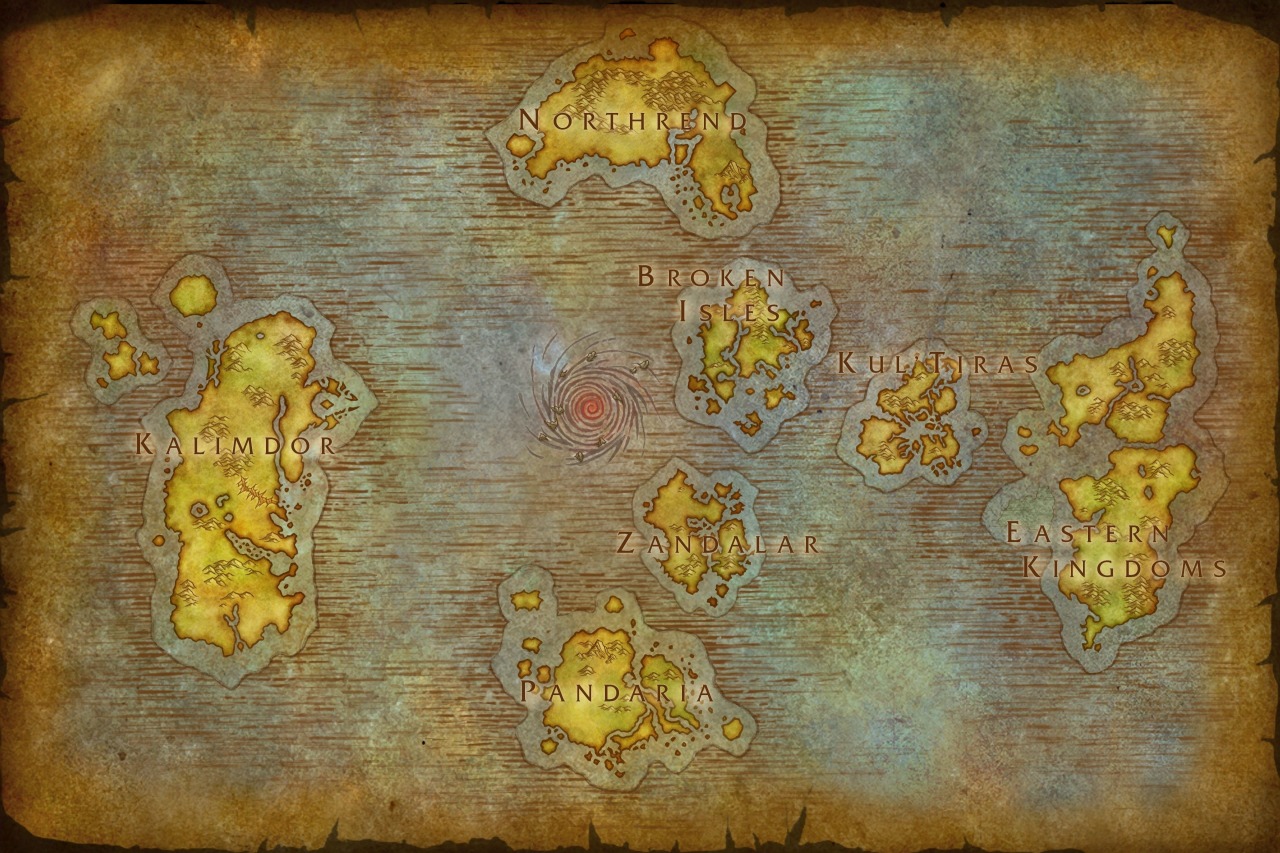
The pangea-esque pre-Sundering Kalimdor included in the books is just too different from the modern map for it to be recognizable as a map of Azeroth.
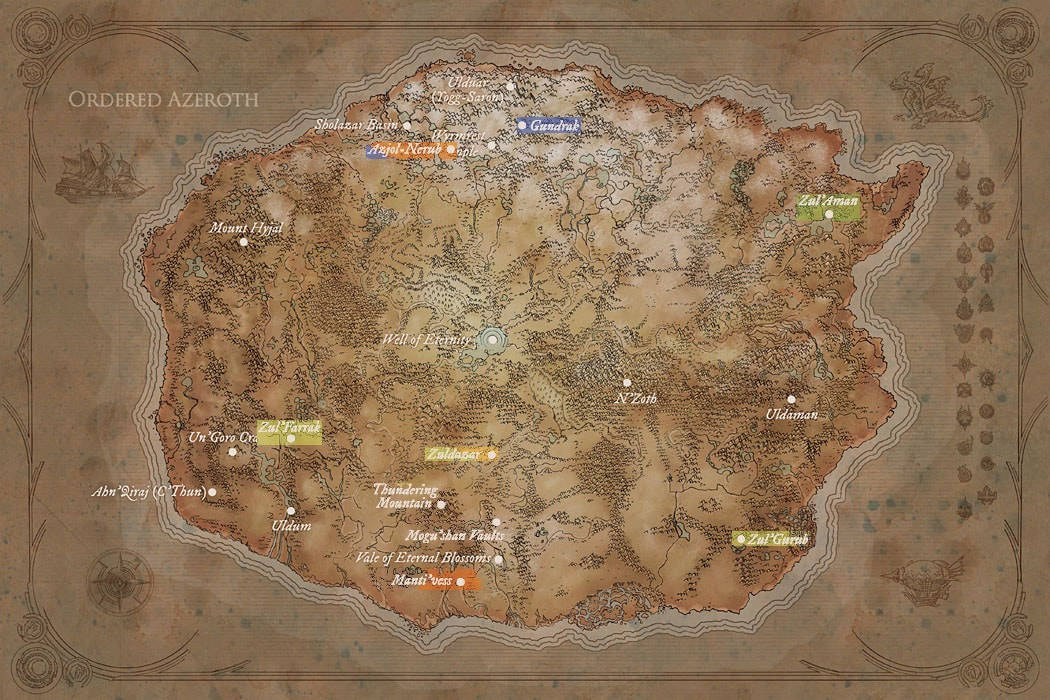
I would have preferred that each iteration of the map pre-Sundering had lines drawn to mirror the modern Azerothian world map to allow the reader a point of reference. Legends would have also helped to properly identify elements on the map, instead of relying on labels and colour-coded territories. I would have also liked to see more maps. Warcraft lore relies a lot on visualizing peoples and armies travelling the world. And considering that Azeroth itself has been touted as a character in the story of Warcraft, I think more maps would have helped to drive home how important the world is to the lore.
As I’m currently worldbuilding my own world, I know how difficult it can be. When worldbuilding, you are trying to explain a fictional world as if it were real, using academic terminology to describe something that is meant to be enjoyed fantastically. World of Warcraft: Chronicle Volume 1 unfortunately falls into the trap I’ve fallen for repeatedly in which they use the literary trope “no one really knows” when describing ambiguous moments in history. Sometimes it’s not as obvious, such as when an important turning point in lore is treated as inevitable and not worth explaining. My gut reaction when I encounter this trope is to respond: “Well, you should know. You’re the writers.” I consider this kind of writing lazy, a way to avoid explaining what could be construed as boring or controversial. In my opinion, these kinds of shortcuts should be avoided. Figure out a way to explain it, or don’t include the information at all. The fact that the writers resorted to this literary trope adds to my confusion as to what the Chronicle is supposed to be—the lack of detail in its maps being another factor. The volume is structured like a history textbook, with events told in chronological order and even has annotations in certain sections. However, the majority of the volume is also written like a storybook. Each section is its own distinct narrative told as if it were a mythological legend. The alternating tone can be jarring at times, especially when it occurs within the confines of a single narrative. One moment the author is giving detailed descriptions of the actors in the narrative and provides insights that the persons living the events could not know, followed by a “no one really knows why” passage as if the story is being told from an actor’s perspective in the world. And so I can only assume that either the writers were aware of this flipping tone and were okay with it, or their quality control is lacking. Either way, I can’t excuse the misstep on Blizzard’s part.
It’s a shame, because I did enjoy how the volume is written. I don’t know how much involvement Chris Metzen actually had in the writing of this particular volume, though I know he wrote many of the original stories that would eventually be adapted here and his style of writing shines through in certain stories. I read the whole volume in one sitting, feeling rushes of memory as I remembered events from the books, short stories, comics, and in-game events that the Chronicle makes reference to. It’s obvious that the volume is a labour of love as it shines with descriptions of people and places that have never existed, but somehow make it feel real. The size of the book is also nice, making it feel like a textbook rather than a work of fiction. The art is amazing as always, though I wish they would have used exclusively original art as I recognized some of it from short stories from previous products. I have debated with myself whether the World of Warcraft: Chronicle could have easily been available online, similar to the existing WoWpedia and WoWWiki fan sites. In the end, I don’t think that the intent of the Chronicle is to make a lore database or a textbook, but to provide fans with a hard copy of the story they’ve grown to love over twenty-five years. Something to share with others, to read to their kids, or to revisit their time fighting alongside Thrall or saving the world with Varian by their side.
So far, the World of Warcraft: Chronicle is worth adding to your collection if you have an interest in either Warcraft lore or worldbuilding. It allows fans of the series to experience the narrative of Warcraft in a sensible, chronological order. Long-time fans invested in the story will also be able to reminisce about their time in Azeroth or their first time reading Warcraft lore in secondary media. For worldbuilders, Chronicle is a learning opportunity on how to build a vibrant, breathing world with history and interesting characters. There are some hiccups along the way, but none so damaging that we can’t learn from Blizzard’s twenty-five years of experience. I’m excited to read the following two volumes in the Chronicle. and would even be interested in revised versions as new lore is added to the World of Warcraft.
The following includes my own personal observations based on my experience with Warcraft lore. These observations don’t impact the quality of World of Warcraft: Chronicle Volume 1, but as I have a long history with World of Warcraft, I want to spend some time discussing them. If interested in purchasing the Chronicle. reading this section is not necessary. Also, there are some mild spoilers for the Chronicle and for events not mentioned in the Chronicle.
I was happy to read the forewords from Chris Metzen and Christie Golden. Metzen is the closest thing I have to a hero within the game development industry, and his words to the reader is made all the more potent following his retirement later the same year. I can almost hear his deep, gravelly “I voice every other male character in Warcraft” voice as I remember how invested and influential Metzen has been to Warcraft. As for Golden’s foreword, I’m always happy to hear from her as she is my favourite Warcraft author, penning such stories as Rise of the Horde and Jaina: Tides of War, and has even been helping the World of Warcraft writing team with Battle for Azeroth. She reminds us that we are as much a part of the world as its characters. Also included in the foreword is Knaak. I have never been a fan of Knaak’s contributions to the universe—I consider Stormrage the worst World of Warcraft novel, Rhonin is my most disliked character (I was happy to see him removed in Jaina: Tides of War), the dragon aspects lore (which he helped to construct) is the most boring element in Warcraft lore, and he always came off as a self-absorbed writer who constantly had to show how good he was. His foreword only reinforces his vanity as he boasts his writing credits from other book series I have no interest in, and he barely shows any interest in Warcraft itself. I can only hope we don’t see another writing credit from him in the near future. I was also happy to see that his time-travelling additions to the War of the Ancients weren’t so much as hinted throughout the Chronicle.
I ended up accepting most of the changes Blizzard inevitably had to make for the Chronicle. After twenty-five years of worldbuilding and narrative, retcons and re-imaginings are bound to happen. I was never really interested in Titan lore, seeing them more as scientists than gods. The Chronicle still does not identify them as gods, though they have heavily reinforced the inspiration the Titans take from Norse mythology with new lore added in the recent Legion expansion. Because of my disinterest in the Titans, I am equally apathetic about the reveal that Azeroth itself is an undeveloped Titan. However, I am interested to see what will happen if the world-soul awakens or gets destroyed, as I imagine it would spell the end of the world either way. A diagram showing how each elemental, magical force, and concept interacts is a nice addition, and it’s nice to see certain concepts like necromancy and the Void given concrete definitions. Legion seemed to give the Void a larger role, but it wasn’t until this volume that everything is given a tangible place within the universe. I’m not a fan of Blizzard shifting the big baddy to the Void now that Sargeras is gone, but I can understand the need. It makes sense given the changes they’ve made to Titan lore within the Chronicle. though I almost think it would have been better if they had never explained the Old Gods, the Void, the Light, and so on. Mystery can improve the experience more than a detailed explanation. One thing I wish they would explain is Elune. Apart from some conversations between Tyrande and Velen, there has been no concrete explanation as to what Elune is. Is she a Titan? A naaru? A wild god? A “light lord”? To use a familiar expression, no one seems to know.
Finally, I wish they had spent more time on the titan-forged and the curse of flesh, as this was always one of the most interesting parts of the Old God-Titan lore. However, they spend more time on the contrived Loken narrative, which I felt was put together to force events to go down a specific path. In fact, a lot of the lore midway through World of Warcraft: Chronicle Volume 1 feels forced, as entities act out of character in an apparent effort to move the plot forward. Thankfully, the latter portion of the Chronicle makes up for it by detailing early to mid Eastern Kingdoms history, which I have more interest in.
Select a result to preview