


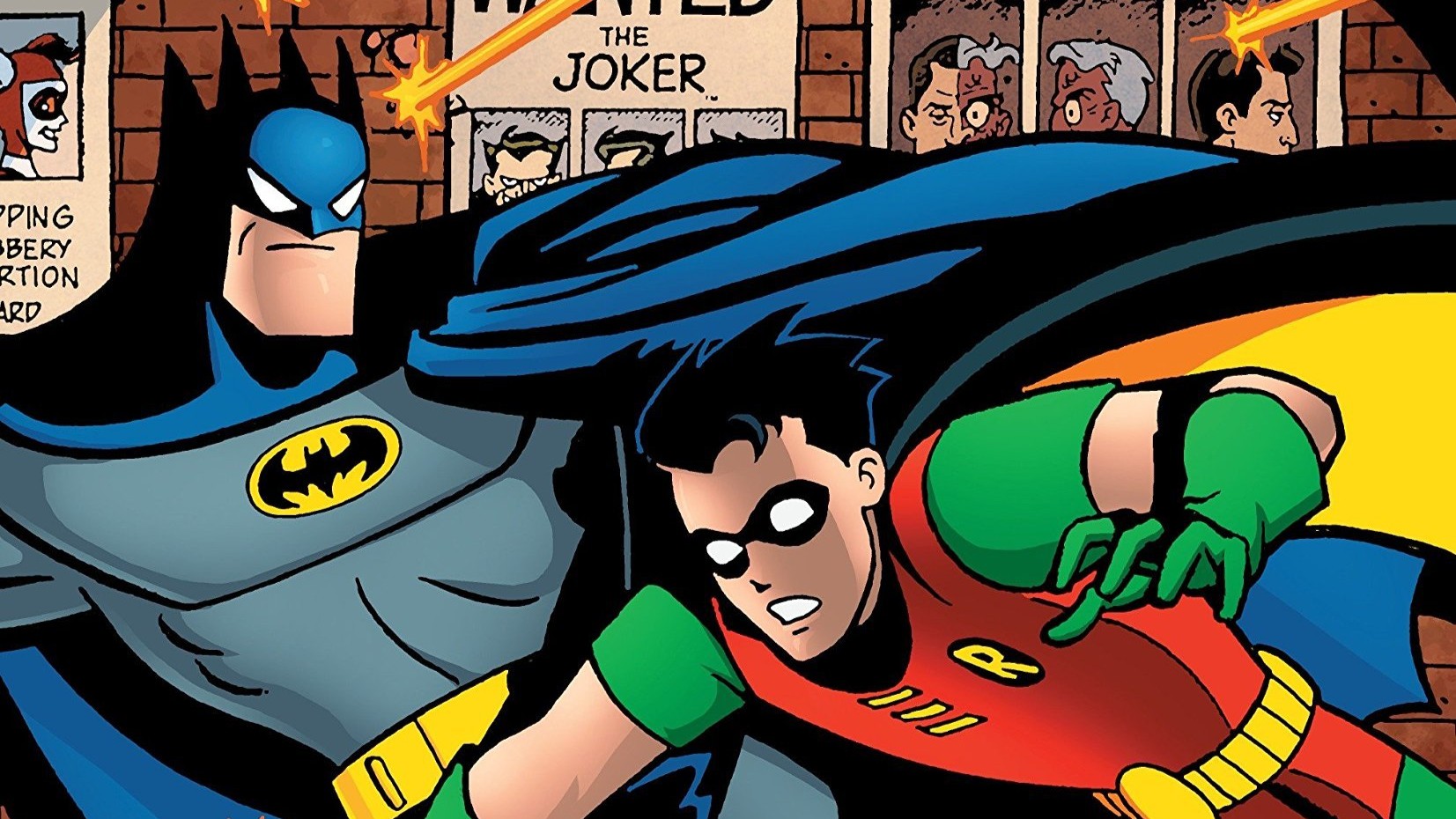
by Paul Dini, Ty Templeton, Rick Burchett
2016, DC Comics
Paperback, 240 pages, $25.99 CAD
Rating: ★★★☆☆
It took me a long time to get into Bruce Timm’s DC animated universe—or DCAU for short. I always felt like Batman: the Animated Series was beyond me as a child, though I do remember enjoying the Justice League series once I got older. It would be many years later before I would immerse myself into the entire DCAU, watching from the beginning of Batman: the Animated Series until the end of Justice League Unlimited. Some properties were difficult to find, such as Static Shock or The ZETA Project, so I will need to re-experience those again at a later time. Nevertheless, when I saw Batman & Robin Adventures: Volume 1 in the bookstore, I decided to pick it up on a whim. I had been vaguely aware of tie-in comics for the DCAU for a while now, but I hadn’t gone out of my way to find them. I also tend to favour collections over individual issues, and this volume contains issues one through ten, making it a worthy purchase in my mind. I had a pleasant experience with the Batman & Robin Adventures. Half the stories felt as though they could have been lifted directly from the show, while the other half reminded me of the few Bronze Age comics I read as a child. I had some problems with a few of the issues, due in part to a rotating cast of writers and artists.
I will be reviewing each issue individually, followed by my overall assessment of the volume as a whole.
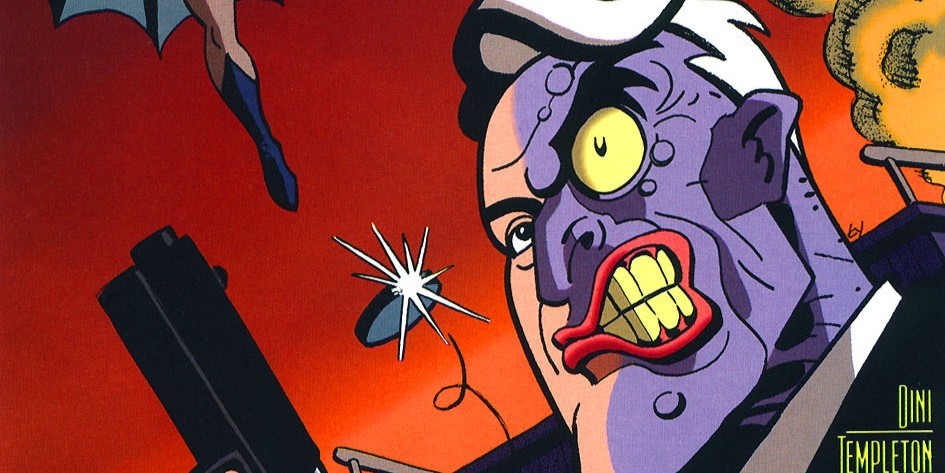
by Paul Dini, Ty Templeton, Rick Burchett, 1995
Rating: ★★★★☆
_Two Timer* is one of those stories that could have easily been an episode of Batman: the Animated Series, going so far as to build on the existing Two-Face canon the series established in its first season. As the story appropriately spans two issues, Dini and Templeton spend some time developing characters in the first issue. This extra character building pays off, as it brings home how unhinged Harvey Dent truly is and how blind Bruce is to his friend’s condition. I was not a fan of the Joker’s shenanigans, but I’ve never really been a fan of the DCAU’s early Joker. The only thing that kept me watching any episode with Joker was Mark Hamill’s voice acting. I can still hear his distinctive take on the Joker’s voice to this day. In fact, most of the dialogue in Two Timer is reminiscent of Batman: the Animated Series.
_Two Timer* ended up surprising me, as stakes are quite high near the climax. Bruce and Dick are captured in their non-hero personas as Two-Face attempts to take revenge on his ex-fiancée and Bruce for apparent unfaithfulness. It looks as though for a moment that Bruce, Dick, and Harvey’s fiancée may actually be in danger. And yet—as is the case with most stories in this volume—everything is tied up neatly at the end with little to no consequences. We also never delve too deeply into the themes introduced in the story, such as:
While Batman: the Animated Series had some thought-provoking story lines, most of its stories were just fun. Two Timer is no different. It’s a fun ride, but ultimately very shallow and forgettable.
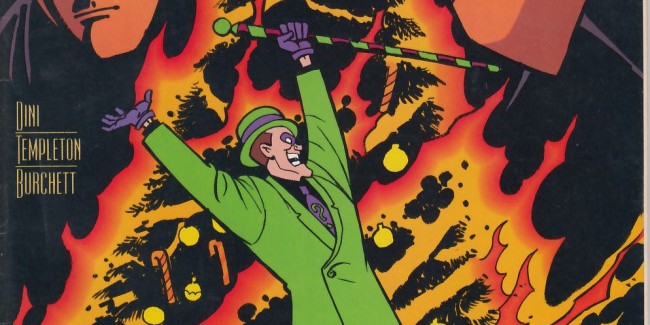
by Paul Dini, Ty Templeton, Rick Burchett, 1996
Rating: ★★☆☆☆
Dini and Templeton come back again with another story worthy of Batman: the Animated Series. In fact, I could easily see Christmas Riddle being featured as a Christmas special in the normal line up of the show. It has the same fun, bombastic adventure that was emblematic of Batman: the Animated Series, while making good use of the comic medium.
I love the idea of the Riddler, but it seems like no one can write him in a way that makes him truly interesting. In theory, he could be one of the best Batman villains. He aims to challenge the Dark Knight’s mind instead of his muscles, to best him with riddles and challenges rather than feats of strength. In practice, he is written as an egotistical maniac who thinks himself smart, and makes bad puns that Batman almost always immediately figures out. Then the inevitable goon brawl happens, reducing the Riddler to a token villain instead of a worthy foe for Batman’s intellect. Christmas Riddle is no different in this regard, going so far as to insult Edward Nygma at every turn and calling out his lack of wit during his robbery attempt.
I have yet to find a depiction of the Riddler that really tapped into his potential. His participation in the Hush arc of the Batman comics almost did him justice, but his inclusion ended up being an eccentricity more than anything. I hope to one day find a Riddler that truly challenges the reader and the Dark Knight.
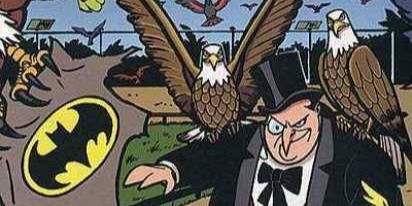
by Ty Templeton, Rick Burchett, 1996
Rating: ★★★★☆
_Birdcage* is the first story in the Batman & Robin Adventures series that doesn’t include Paul Dini in its writing credits, and I was surprised by its unique tone. We get a new take on the Penguin, one which portrays him as an activist rather than just a criminal. There’s a lot more nuance than what I’m used to from the DCAU’s early Batman, and I think that made Birdcage memorable to me. Instead of the Penguin being focused on gathering wealth, he uses his resources and criminal skills to perform environmental activism. Of course the Penguin being who he is, his methods are not exactly ethical. Nonetheless, both Batman and Penguin are both in the gray here. Penguin committed robberies to fund his activism, but never harmed anyone. His goals are noble, if misplaced.
On the other hand, Batman seems justified in wanting to stop Penguin’s crusade as he believes Penguin is holding people hostage, but he then brings harm to the birds under Penguin’s care in the process. I would also think that if Penguin’s concerns for the birds were justified, Bruce Wayne would have the means to help the animals. Unfortunately there’s no indication that Bruce helps the birds, though we do get a nice moment at the end of the story where Penguin appears satisfied he was able to free some of the birds. I would have preferred a more grounded conclusion based on how the story had unfolded, though the ending seemed more in line with Batman: the Animated Series’ overall tone.
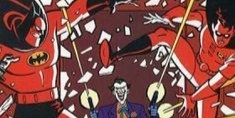
by Ty Templeton, Tim Harkins, Rick Burchett, 1996
Rating: ★☆☆☆☆
With Tim Harkins guiding the art towards a more eccentric, cartoony style, Second Banana ends up feeling like a story straight out of the Silver Age of comics. This Joker is cartoonishly homicidal, no better or worse than a zany 90s Looney Tunes villain. Instead of an unpredictable psychopath, the Joker portrayed in Second Banana is a trickster with a short temper and too much time on his hands. While I’m not a fan of a hyper-violent serial killer Joker either, I think the Joker portrayed in The Dark Knight by Heath Ledger, the Joker from the Arkham series, and the Joker from the Injustice games embody what I believe to be the “ideal” Joker character. In conclusion, I didn’t enjoy Second Banana. It felt silly even by the DCAU’s standards, and I found the art unappealing and too far removed from the source material.
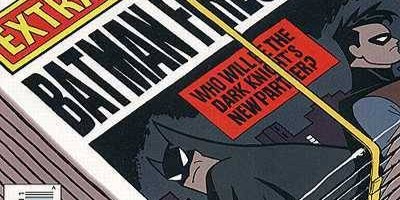
by Templeton & Burchett, 1996
Rating: ★★☆☆☆
One of my biggest critiques of geek culture is its tendency to stroke its own ego once it becomes mainstream enough. It’s pretty evident in comics, though the best example I have of this self-infatuation is actually through music. I know a music genre has jumped the narcissistic shark when song lyrics start referencing the genre itself rather than anything meaningful. Hair rock—with its overabundant praise of rocking—is a good example of this phenomena. Club music is guilty of this as well, as it focuses primarily on the act of going to clubs. As for comics, Round Robin is a good example of this kind of self-absorption.
Not only is the narrative kickstarted by the concept that Batman is an underground celebrity, but it also takes what could be a serious take on the risks involved in vigilante justice and turns it into a series of gags about kids wanting to dress up in tights. I was also unimpressed with the Carrie Kelley pseudo-cameo—it’s obvious by the character design that the female robin is an homage to the Robin from The Dark Knight Returns. I am growing tired of her being one of the only depictions of a female Robin to Batman, considering that there have now been four core male characters that have taken on the mantle of Robin over the years, not counting the rest of the Bat-family which remains predominantly male. I don’t count characters like Batgirl or Batwoman as sidekicks, as they tend to fill the role of associate or partner instead. Like in some many of her incarnations, not-Carrie is the butt of the joke, who is—unfortunately—unable to be taken seriously because she is an over-eager girl trying to do a man’s job. Maybe I’m taking Round Robin too seriously. After all, it concludes with a joke at the expense of Grayson—a rather good joke at that. I think I’m just miffed because Round Robin raises up a lot of questions about the nature of being a vigilante hero that it doesn’t address, discarding any thoughtful reflection for the sake of comedy. Even though this kind of storytelling mirrors the early DCAU style, Round Robin feels a bit outlandish even by the standards of Batman: the Animated Series.
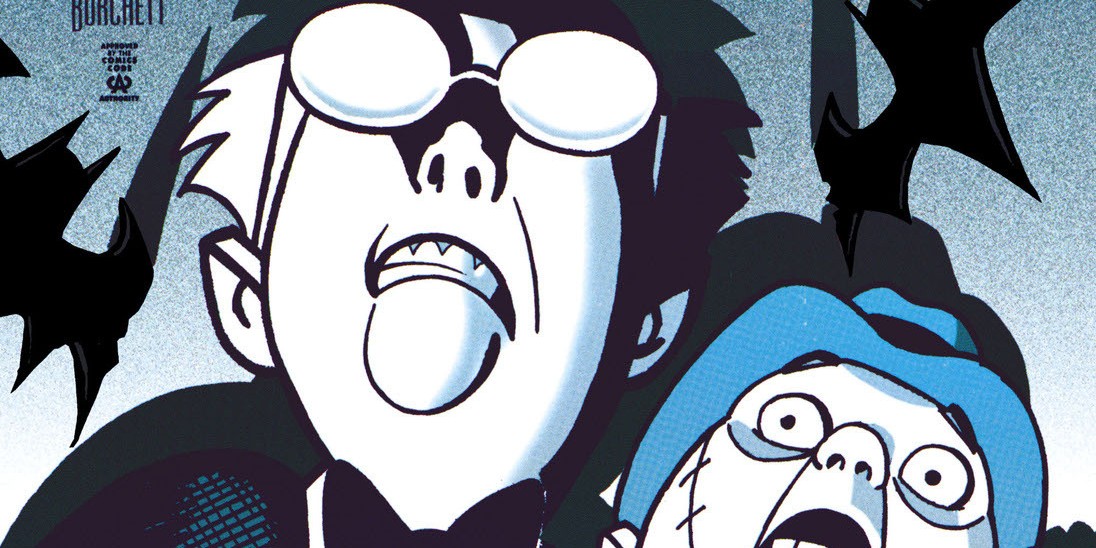
by Ty Templeton, Rick Burchett, 1996
Rating: ★★☆☆☆
I’ve never been a fan of Scarface. In my mind, His Master’s Voice is no different than any other Ventriloquist story and follows the same structure as every other appearance of this character. It usually goes something like this: Arnold Wesker has an identity crisis with a mobster-themed puppet and the audience is led to believe that Scarface’s existence is almost supernatural in nature, and yet still just a delusion of Arnold’s mind. Honestly, I grow tired of this back and forth. It’s as if the writers cannot tip the scales in one direction or another without compromising what makes the villain interesting. I would rather we see the “death” of Scarface, which would lead to some character development for the various Ventriloquist characters.
Instead, it seems DC is intent on the persistent existence of a cliché character that I personally find annoying and one-dimensional. It wouldn’t be so bad if Scarface was confirmed to be another aspect of Arnold’s personality. However, his portrayal—at least in the DCAU—is that of an entirely separate character from the Ventriloquist.
One positive aspect of His Master’s Voice is the tension around whether the Ventriloquist would actually kill his mother or not. I was invested in knowing what exactly Arnold/Scarface would do once they reached their mother, though I had my suspicions that she would either not be there or she would not die. The fact that she was already dead and Scarface was simply looking to tear up her photo felt a bit cheap, but it was a decent conclusion nonetheless. I also thought that the Ventriloquist shooting his own hand was a nice touch. It was obviously added as shock value, but it reinforces my belief that Scarface is simply a part of Arnold’s psyche and not some immortal, supernatural being.
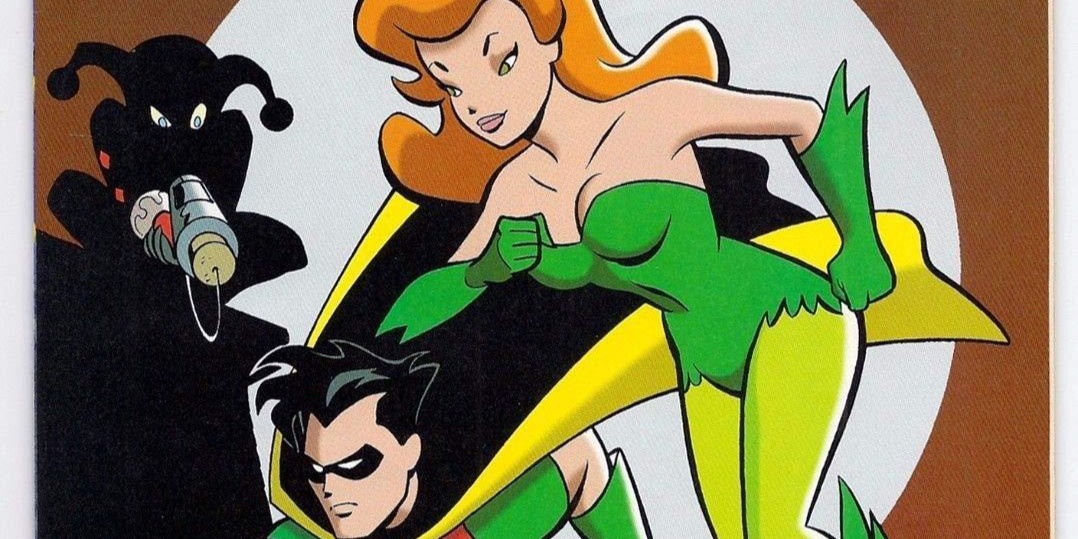
by Paul Dini, Ty Templeton. Rick Burchett, 1996
Rating: ★★★★★
Dini is back as a writer for this issue, and immediately his contribution is obvious. Harley and Ivy and…Robin?—or HIR? for short—is my favourite issue from this collection. It embodies what I loved about the DCAU. It is campy, but still takes itself seriously and doesn’t feel too cartoony. All the characters felt like real people who could feel, grow, and change. I think nowhere is this more apparent than in the fact that Robin becomes entirely complicit in Harley and Ivy’s crime spree. He does not struggle, or act like a moron—he is Robin who just decided that he wanted to help Ivy out. Had it been done any other way, I think the story would have suffered, and cracks in the logic behind Ivy’s powers of persuasion would have started to show.
For example, as I write this review, it occurs to me: why didn’t Ivy ask for the secret identity of Robin or even Batman? And yet, it is only now that I even consider this. I was so engrossed in the narrative that these kinds of questions didn’t even occur to me at the time of reading.
Another aspect of HIR? I enjoyed was the portrayal of Harley and Ivy’s relationship. Ever since their first appearance together in the Batman: the Animated Series episode Harley and Ivy, their relationship has been a staple of the Batman mythos. They’ve even developed a romantic connection through the years. I love that Harley gets jealous of Robin, as it fits her character perfectly. She is an emotionally sensitive person despite her carefree mannerisms, and cares deeply for the people she loves. By the same token, Ivy seems to enjoy Robin’s attentions, but purely in a totalitarian sense. She enjoys the benefits that he brings, but has no feelings for him. She also seems unaware or uninterested in how Harley feels about the affair, which fits her character as well. HIR? is a great example about how the DCAU can shine when it prioritizes characters above plot or action set pieces. DC has a lot of great characters to pull from. We just need writers like Dini at the helm to bring out their potential.
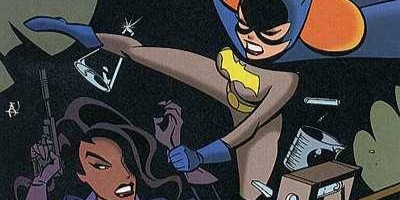
by Ty Templeton, Brandon Kruse, Rick Burchett, 1996
Rating: ★★☆☆☆
I found Tears rather uninteresting in comparison to the other issues in this volume. It doesn’t feel as though anything of consequence happens as Batgirl stumbles through her encounter with Talia al Ghul like a third-rate crime fighter. The only point of interest for the whole issue is it acts a sort of prelude to Issue No. 10, where we learn that the scientist Talia al Ghul is attempting to abduct could provide an ineffective cure for a disease Ra’s al Ghul intends to unleash on the world. While it was nice to see Batgirl as the star in her own story, I was unimpressed with her clever solution near the climax and felt underwhelmed overall.
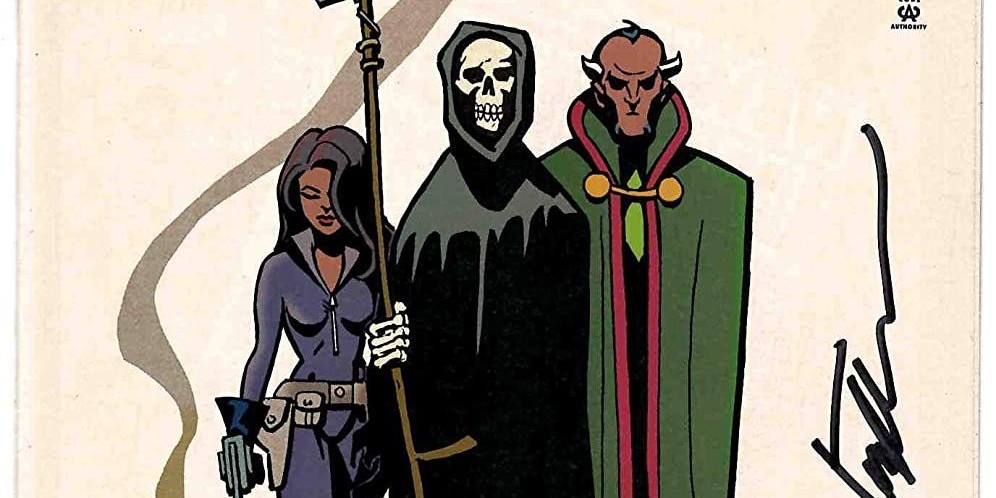
by Ty Templeton, Rick Burchett, 1996
Rating: ★★☆☆☆
Ra’s al Ghul has always been one of my favourite Batman villains, purely for the fact that he is simultaneously a worthy foe for Batman’s intellectual, physical, and emotional state of being. Whereas as most Batman villains can only claim one or two of these feats, I know of few that can challenge Batman emotionally, not to mention all three facets of his personality. And yet I was disappointed that Ra’s’ role in Blood of the Demon is very limited. Most of the interactions Batman has are with Talia al Ghul or with Ra’s’ minions. Ra’s is certainly the mastermind, but I would have rather he interacted with Batman directly.
With that said, Blood of the Demon is a pretty standard Ra’s al Ghul story. Ra’s al Ghul attempts to kill off humanity in one fell swoop, Talia seeks out Batman to stop her father, and Batman uses his skills to stop whatever genocidal plan Ra’s thought up. The only interesting component to Blood of the Demon is how it ties into the previous issue. Talia mentions that she sought to abduct the scientist who developed the disease in the first place, though Ra’s tells her it was futile to do so.
While I only got around to reading Batman & Robin Adventures: Volume 1 now, the issues in its collection date back over ten years. I do not know if their age factors into their quality, but I found myself enjoying the collection as a whole more than I thought I would. It was a trip down memory lane as most of the stories within the collection are reminiscent both in their writing and their art to the original Batman: the Animated Series. Considering these issues were released following the end of Batman: the Animated Series and before the updated version (The New Batman Adventures), I can easily see the Batman & Robin Adventures comic run as a continuation of Bruce Timm’s original vision of Batman. There are some hiccups here and there—Second Banana comes to mind—but there are some gems too, like Harley and Ivy and…Robin? and Two Timer. I’ll be looking out for the next volume in this series in hopes of finding stories of similar quality.
The one criticism I have of Batman & Robin Adventures extends to the early DCAU as a whole. There’s very little in terms of continuity, and most of the stories can live independent of each other. Thankfully this would be remedied by the time Justice League was in production, where the DCAU begins focusing more on character development. However, the Batman & Robin Adventures comics suffer from a similar lack of character development. In fact, the most interesting issues are the ones that do focus on character development and continuity. It may be too late to take away anything from this collection, but it should remain as a case study on how to make better DC stories by focusing on the characters instead of on plot or action set pieces.
Select a result to preview