


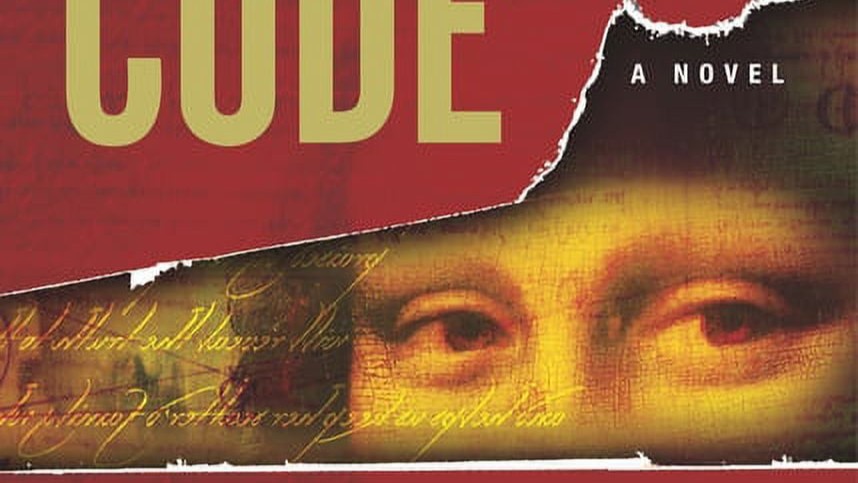
by Dan Brown
2003, Doubleday
Hardcover, 464 pages, $51.00 CAD
Rating: ★★☆☆☆
The appeal of The Da Vinci Code most likely lies solely in its subject matter—namely the idea that the church has conspired over millennia to enforce patriarchal rule through religious doctrine. I imagine the scandal of such a claim would have been enough to carry the novel in 2003, but it is rather mundane in 2026, when the follies of the catholic church are well known. Without the shock that comes with claiming that the church is conspiring to hide Jesus’ blood legacy, The Da Vinci Code ends up falling flat.
Dan Brown depends on unreliable narrators, the withholding of information, shifting perspectives, and constant amateur cliffhangers to force intrigue into the story. If we had access to everything the characters thought or felt, there wouldn’t ever be any tension, and the novel would lay bare the blandness of its characters and narrative. While its clear that Brown did his research when it comes to theology, history, and even architecture, it’s not enough to keep my attention. I often found myself glossing over his meticulous descriptions of Parisian geography and secret societies as a result.
The novel’s problematic elements are also evocative of the era in which it was written, from its masochistic albino boogeyman and its fat villain with physical disabilities, to Brown’s blatant transphobia and denigration of sex work. The writing is also surprisingly misogynistic despite its apparent reverence of female divinity. The novel treats Sophie Neveu as little more than an object for Robert Langdon to pursue and faun over—almost as if she is a failed allegory for the Holy Grail itself.
Knowing how popular the book and subsequent movie had been in the mid-2000s, reading The Da Vinci Code in 2026 was an interesting look into what was considered groundbreaking at the time. It’s perhaps not surprising that something like The Da Vinci Code would become a smash hit, but it is definitely disappointing that the novel had warranted such attention in the first place.
Select a result to preview